GRIT - A History of Board Track Racing
A three-part documentary examining the history of the American Motordrome.
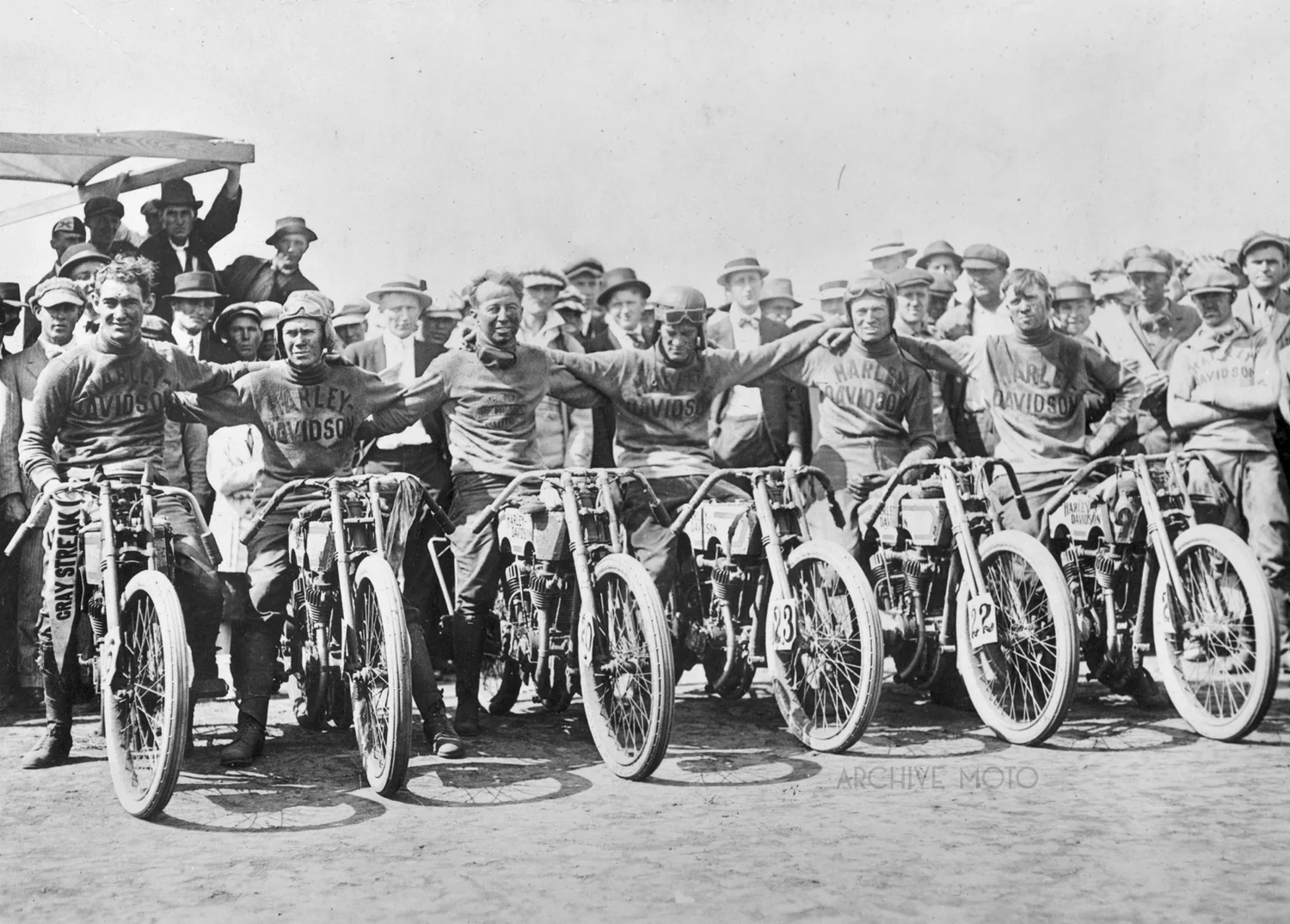
Often conflated with carnival thrill shows and the massive wooden speedways of the 1920s, America's original timber race tracks, called motordromes, were dangerous and exhilarating saucers where the toughest of the tough went elbow to elbow for a taste of the glory and the gold. For just 5 short years between 1909 and 1914, only 26 of these perilous stadiums were ever built, many having only hosted motorcycle races for a season or two. Still, inside their steeply banked walls, the heroes of a thrilling and often deadly sport captivated the country, cementing a legacy and mythology which continues to sends chills through those that learn about it.
Head to the Archive Moto Youtube Channel to watch the trailer for GRIT, a three part documentary series looking at the history board track racing, one of America’s most infamous and sensational sports.
On 328 acres of farmland just north of Indianapolis and at the cost of an estimated $350,000, America gained its first closed circuit raceway, the 2.5-mile-long Indianapolis Motor Speedway, in the late summer of 1909. Rushed to completion for the Federation of American Motorcyclist's National Meet that August, the imposing speedway was like nothing seen before, with massive grandstands capable of seating 10,000, bleacher seating at the turns to accommodate even more spectators, concessions buildings, a state-of-the-art garage paddock, and medical facilities. The pace required to complete such a compound proved to be a bit too hasty, and reports from its first observers likened it to a dirt road sprinkled with a loose layer of crushed stone. Today, the IMS holds a reputation as one of the preeminent auto racing tracks in the world, but upon its unveiling, the first competition to take place at Indianapolis was a motorcycle race, and 18-year-old Ray Seymour, the California Wonder arrived to unleash his Reading-Standard racing special.
For too long, the life and accomplishments of Ray Seymour, one of America’s most successful pioneer motorcycle racers, have gone unacknowledged. Like so much of the remarkable history of American motorcycle racing, Seymour’s story has largely been lost over time. Perhaps it is because of his steady and reserved personality compared to his more bombastic and temperamental contemporaries like Jacob DeRosier or Charlie Balke. Maybe his avoidance of tragedies like those that cut short the lives of countless young racers, like his close friend and teammate Eddie Hasha, shielded him from a similar infamy. Unlike later generations of professional racers like Jim Davis and Joe Petrali, Seymour was among the first class of motorcycle racers, long since out of the game by the time the sport reached its height. Still, he was in his prime at the height of the infamous age of board track motordromes and excelled because of his skill, athleticism, and temperament, outliving many of his pioneering friends and conquering nearly every podium and record of his time.
Archive Moto, the little research project that began with Georgia Motorcycle History has grown yet again! I am excited to now be producing videos in a continued effort to preserve and share the remarkable history of American motorcycle culture. It is a new chapter for the project, supported by enthusiasts who have become members of the Archive Moto Patreon. Both the Patreon community and the Youtube channel are young but growing, and if you enjoy the articles, videos, and books, consider helping support the project by Subscribing to the channel, liking videos, and sharing them. If you would like to support this research and help keep quality content rolling out, considering joining the Archive Moto Patreon community for as little as $5.
Beyond that, the mission is to preserve and share this history, so the best thing you can do to help is simply enjoy reading and watching, and share what you like with the folks who’d like it too.