As it did around the globe, the Great Depression served as a grand a catalyst within American motorcycle culture. Both the sport and the industry were forced to adapt to the economic decline in and the changes spawned an entirely new culture. Indian and Harley further refined their smaller 45 cubic inch models, packing them with value, and leaning into a focus on design to weather the storm. With the addition of the American motorcycle Associations professional 45 class, both companies newest machines became American favorites. Still, the financial crisis marked the end of the road for Excelsior Motorcycles, one of America’s Big Three manufacturers who had been in business since 1908. Despite having found success on both the road and the track, including being one of Indian’s fiercest competitors in the golden age of the motordrome, Excelsior shuttered its doors in 1931, leaving Springfield and Milwaukee to duke it out for supremacy.
The early years of the roaring twenties represent the first high water mark in professional motorcycle racing. It was a period when sophisticated machines were let loose by men of true and unrelenting grit. In the previous decade, motorcycle racing had bloomed into several forums, and the spectacle enthralled the country. By the early 1920s, racers had kicked-up tails of dirt and dust on flat tracks, kept the enthusiasts breathless on the edge of the motordrome bleacher, and stretched the capabilities of iron and rubber on the colossal board track speedways to their limits. Still, by the latter half of the decade, the sport, as well as the industry, was in significant decline, and the high waters of the golden age of motorcycle racing began receding.
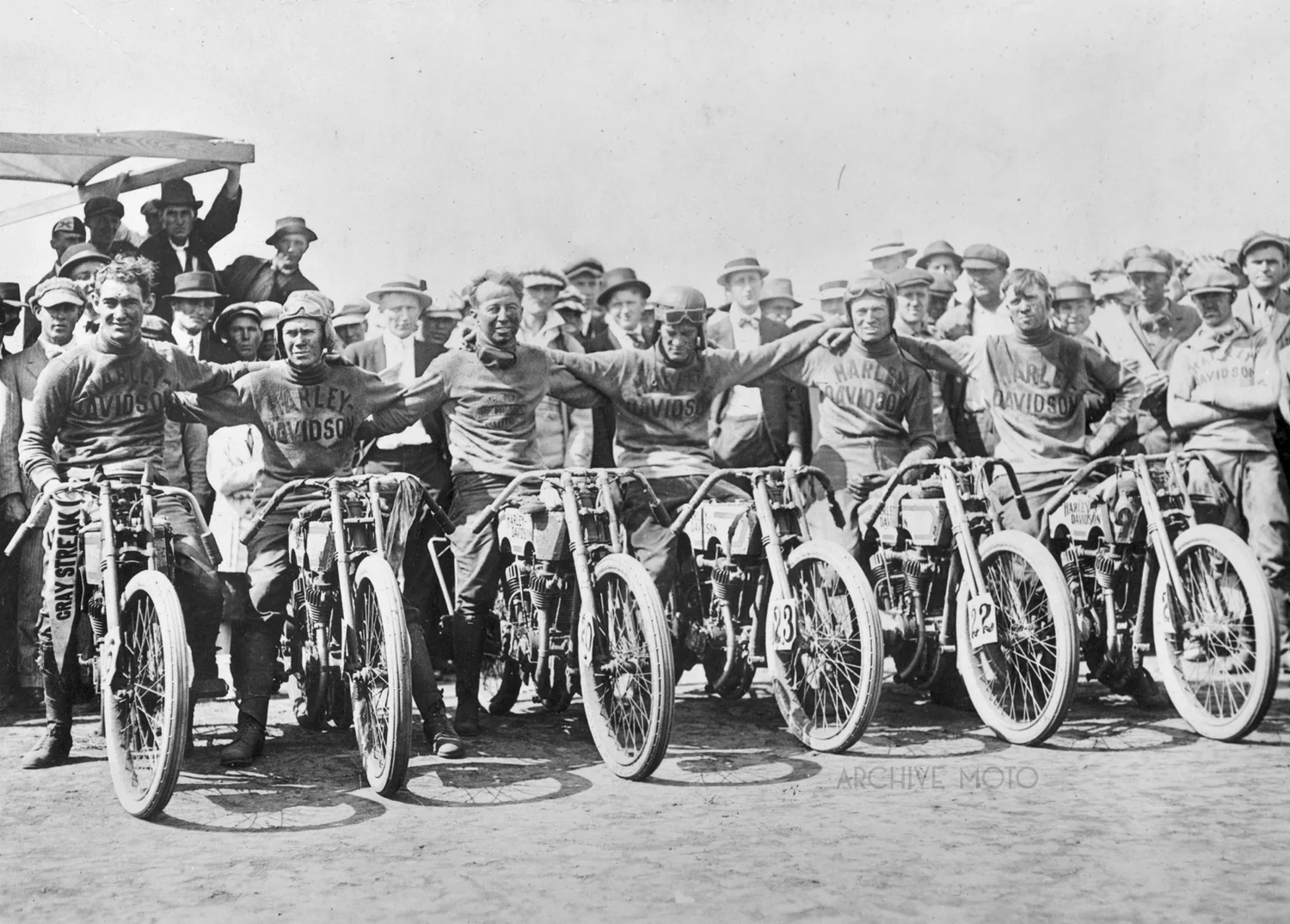
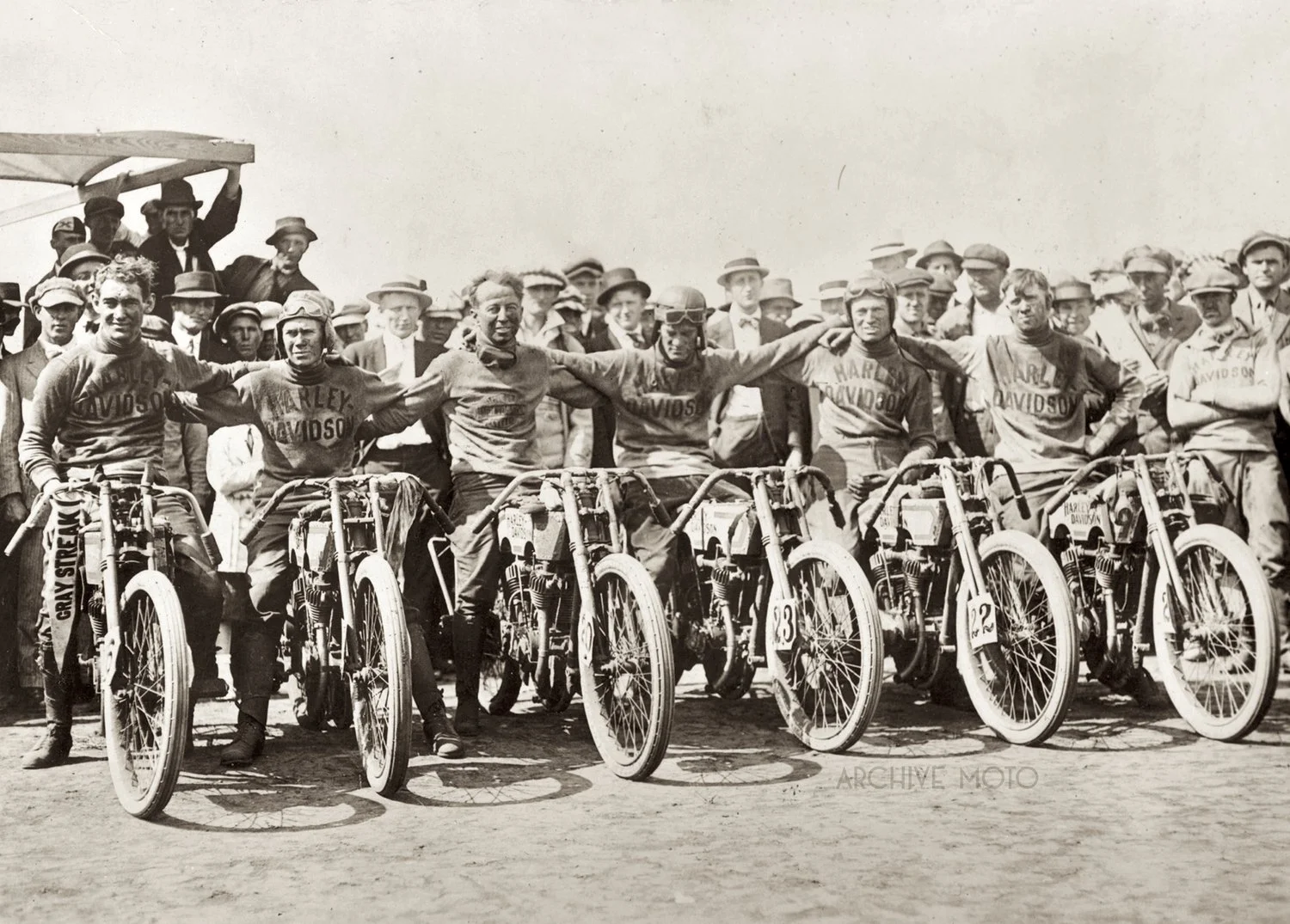
In the years preceding WWI, motorcycle racing in the United States had grown from low-speed grudge matches on local horse tracks to unrestrained, factory-supported speed blitzes on motordromes, flat tracks, and superspeedways. With Harley-Davidson entering the sport in 1914, the two central competing brands, Indian and Excelsior, found themselves in a three-way battle against a well-funded and laser-focused adversary. Local dirt flat tracks continued to rise in popularity, and the Dodge City 300 became the sport's premier race. Still, as the gates of America's infamous board track saucers, the fabled motordromes closed, a new breed of track soon emerged.
The white-hot excitement of the American motordrome came hand-in-hand with near-weekly accidents, and with an ever-rising death toll, wooden saucer racing would not last much longer. In just four seasons, close to 30 young motordrome racers had lost their lives along with another dozen spectators. Public outcry and a growing distaste within the industry marked the beginning of the end for the fabled wooden bowls almost as soon as they arrived. Then, in September 1914, the last board of the short, circular wooden motordromes was nailed in place in Omaha, Nebraska.