The first decade of the American motorcycle was nothing short of sensational. Hundreds of manufacturers rolled thousands of machines out of their factories, each more capable than the one before. In a time when automobiles were still prohibitively expensive, motorcycles offered people of every status an urbane and practical mode of transportation. Local motorcycle clubs sprung up across the country, as did numerous trade publications describing the vast spectrum of motorcycling life. As an exhilarating offshoot of the wildly popular bicycle racing circuit, racing motorcycles had become one of the most popular sports in the country. Once competition reached a national level, the first racing stars emerged simultaneously with the first factory teams.
The motorcycle was born on the race track. Its creation resulted from globalized industrial innovation combined with an unrestrained passion for bicycle racing at the turn of the 20th century. The introduction of the internal combustion engine in Europe generated a flurry of new mechanical applications, including the invention of the tandem motorized pacing cycle. Used to create slipstreams for the cycling stars of the day, the sight, sound, smell, and speed of these motorized pacing machines made them an instant sensation at the country’s wildly popular bicycle velodrome races. A new industry exploded as spirited engineers and ambitious entrepreneurs began adapting and marketing the latest technology for everyday use; the motorcycle had arrived.
In July 1911, the finest motorcycle racers in America gathered to compete in a weekend full of National Championship events, including the country’s first amateur championship. Still, the races weren’t actually held in the United States. Initially, America’s first Amateur National Championship races were slated to run in conjunction with the Federation of American Motorcyclists’ massive annual gathering, which in 1911 was in Buffalo, New York. However, the track conditions in Buffalo proved too poor to compete, so, much to the irritation of the enthusiasts on-hand, the weekend races were moved just over the border to Fort Erie, Ontario. Over a dozen events were run on July 14 and 15 at the 1-mile dirt oval at Fort Erie, drawing America’s most prominent manufacturers, their latest racing specials, and some of the biggest names in the sport.
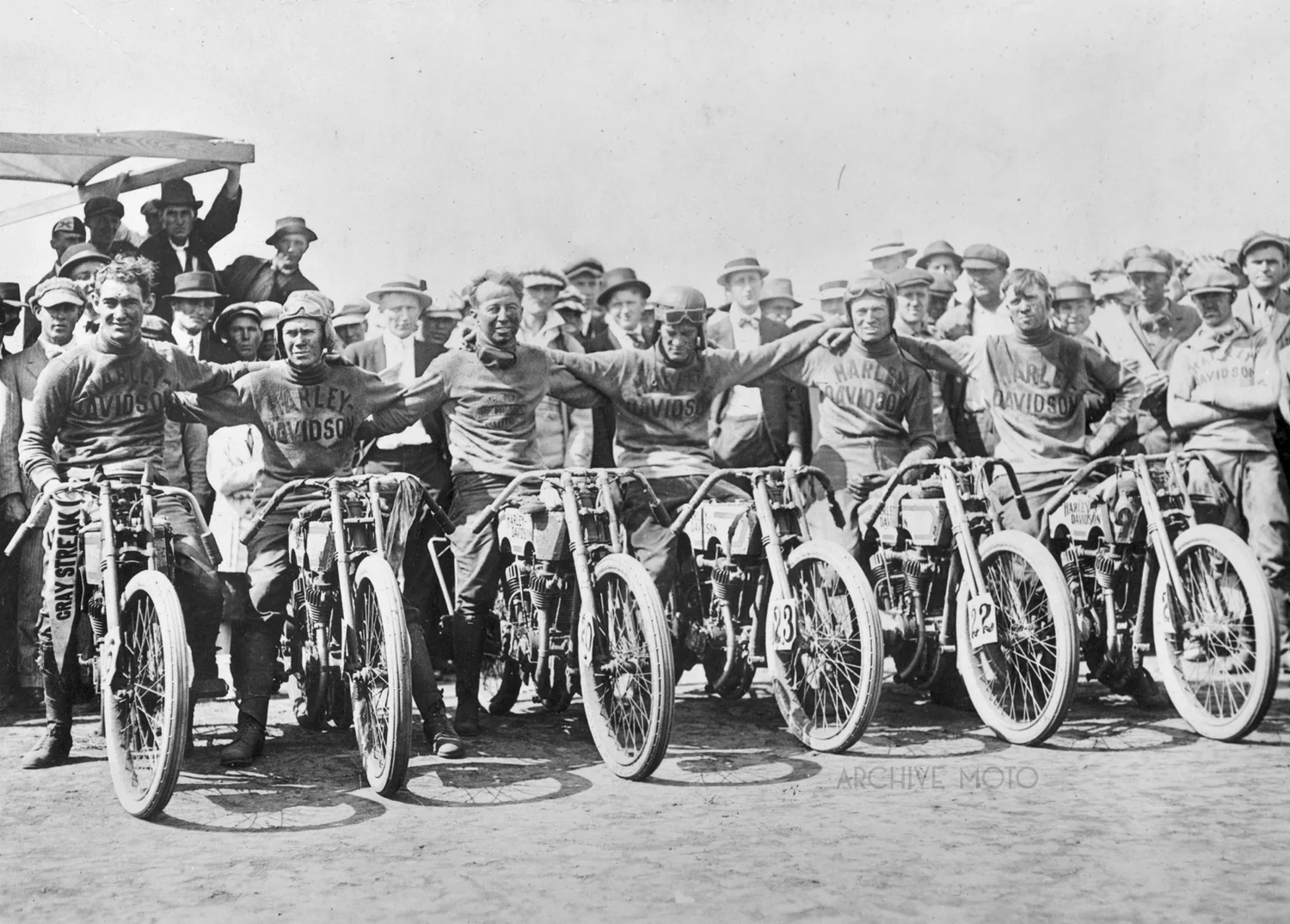
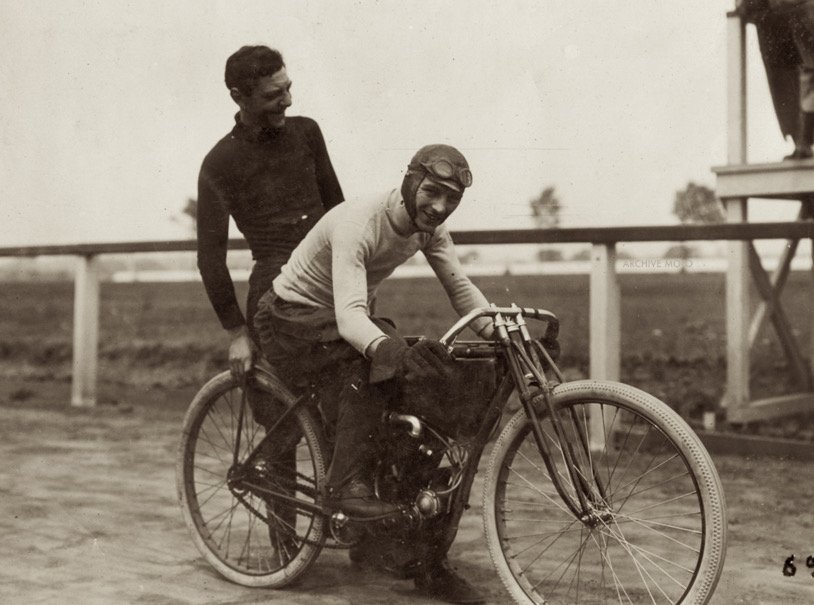
A southern privateer in early American motorcycle racing, here is Martin Schroeder showing off his factory works Harley-Davidson 11k racer after the 1914 F.A.M. Grand Prize 300-mile race in Savannah, Georgia. A Savannah local, Schroeder acted as Vice President of the Savannah Motorcycle Club and was an avid racer in regional events throughout the teens. Though not quite as rowdy as the later famed motorcycle clubs of the 1950s and 1960s, the Savannah Motorcycle Club had a reputation for being a rather irreverent bunch. As the reach and influence of the industry spread into the deep south, Schroeder helped clean up the club's reputation, aligning them with the F.A.M., and playing a prominent role in staging races in the area, including the 1913 and 1914 Savannah 300 endurance races. For the 1914 event, Harley-Davidson selected Schroeder as one of their factory-supported competitors, one of eight men who made up Harley's first-ever factory works team, the precursor to the Motor Company’s legendary Wrecking Crew.