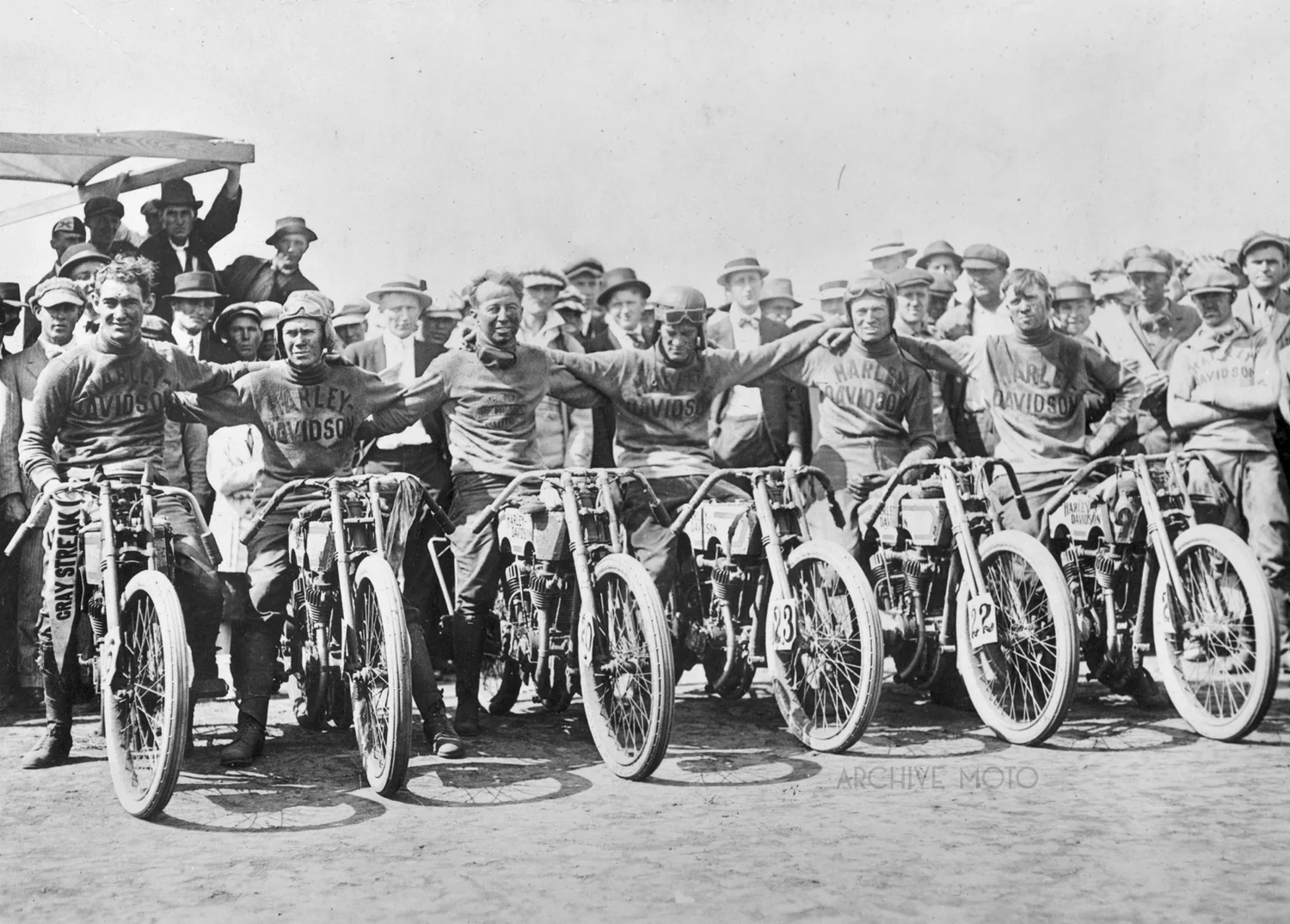
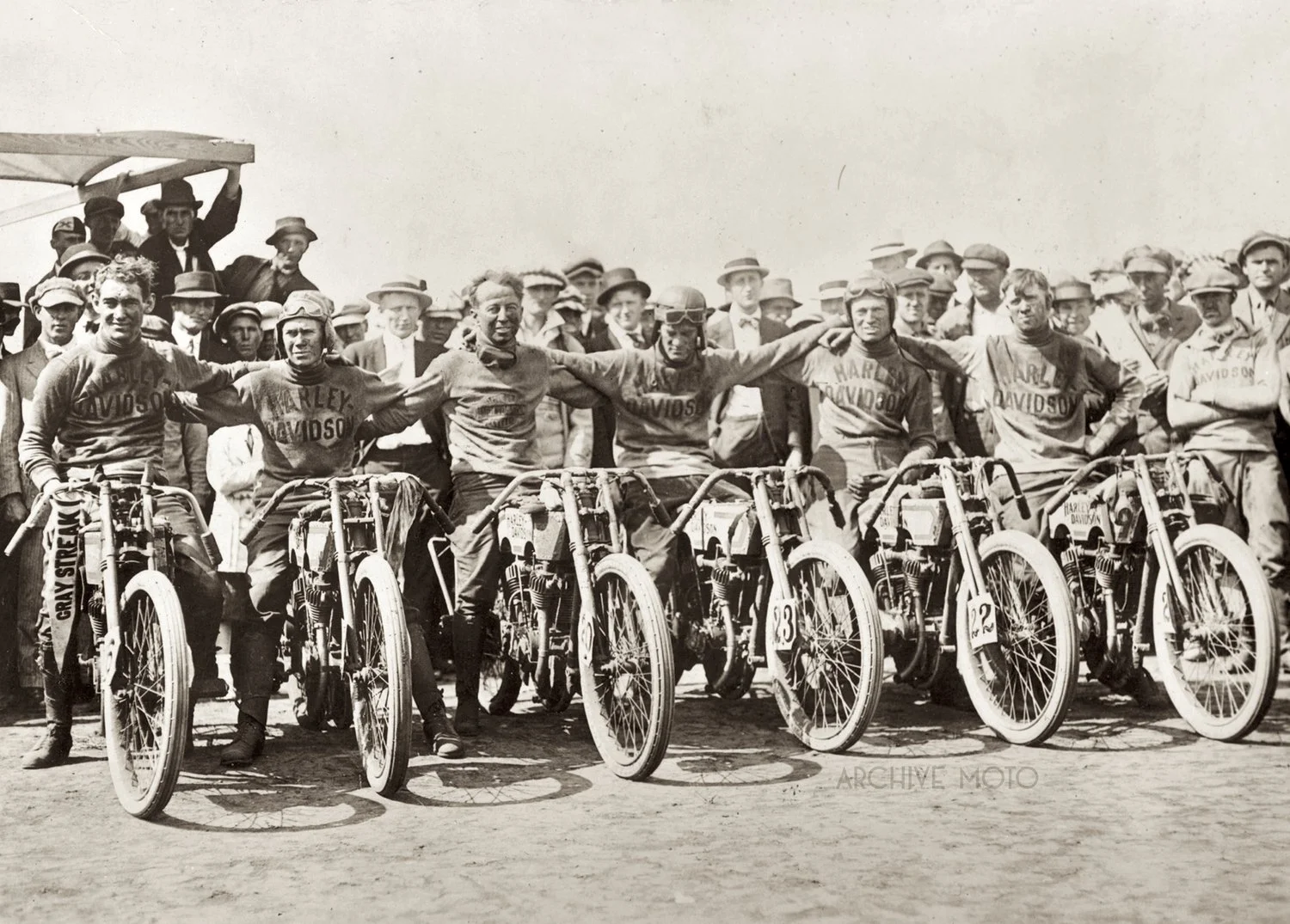
In the years preceding WWI, motorcycle racing in the United States had grown from low-speed grudge matches on local horse tracks to unrestrained, factory-supported speed blitzes on motordromes, flat tracks, and superspeedways. With Harley-Davidson entering the sport in 1914, the two central competing brands, Indian and Excelsior, found themselves in a three-way battle against a well-funded and laser-focused adversary. Local dirt flat tracks continued to rise in popularity, and the Dodge City 300 became the sport's premier race. Still, as the gates of America's infamous board track saucers, the fabled motordromes closed, a new breed of track soon emerged.
The white-hot excitement of the American motordrome came hand-in-hand with near-weekly accidents, and with an ever-rising death toll, wooden saucer racing would not last much longer. In just four seasons, close to 30 young motordrome racers had lost their lives along with another dozen spectators. Public outcry and a growing distaste within the industry marked the beginning of the end for the fabled wooden bowls almost as soon as they arrived. Then, in September 1914, the last board of the short, circular wooden motordromes was nailed in place in Omaha, Nebraska.
The first decade of the American motorcycle was nothing short of sensational. Hundreds of manufacturers rolled thousands of machines out of their factories, each more capable than the one before. In a time when automobiles were still prohibitively expensive, motorcycles offered people of every status an urbane and practical mode of transportation. Local motorcycle clubs sprung up across the country, as did numerous trade publications describing the vast spectrum of motorcycling life. As an exhilarating offshoot of the wildly popular bicycle racing circuit, racing motorcycles had become one of the most popular sports in the country. Once competition reached a national level, the first racing stars emerged simultaneously with the first factory teams.
The motorcycle was born on the race track. Its creation resulted from globalized industrial innovation combined with an unrestrained passion for bicycle racing at the turn of the 20th century. The introduction of the internal combustion engine in Europe generated a flurry of new mechanical applications, including the invention of the tandem motorized pacing cycle. Used to create slipstreams for the cycling stars of the day, the sight, sound, smell, and speed of these motorized pacing machines made them an instant sensation at the country’s wildly popular bicycle velodrome races. A new industry exploded as spirited engineers and ambitious entrepreneurs began adapting and marketing the latest technology for everyday use; the motorcycle had arrived.