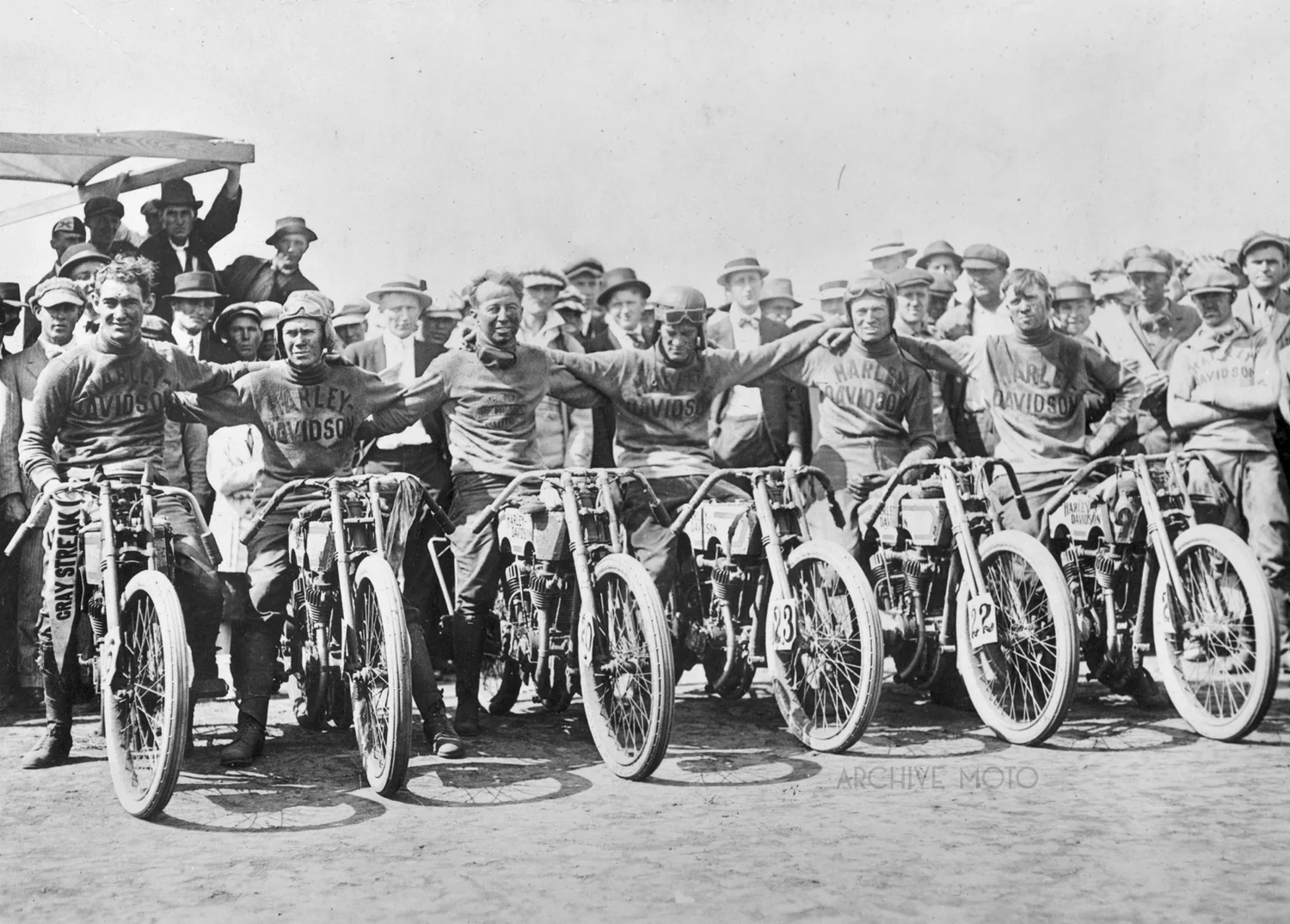
In July 1911, the finest motorcycle racers in America gathered to compete in a weekend full of National Championship events, including the country’s first amateur championship. Still, the races weren’t actually held in the United States. Initially, America’s first Amateur National Championship races were slated to run in conjunction with the Federation of American Motorcyclists’ massive annual gathering, which in 1911 was in Buffalo, New York. However, the track conditions in Buffalo proved too poor to compete, so, much to the irritation of the enthusiasts on-hand, the weekend races were moved just over the border to Fort Erie, Ontario. Over a dozen events were run on July 14 and 15 at the 1-mile dirt oval at Fort Erie, drawing America’s most prominent manufacturers, their latest racing specials, and some of the biggest names in the sport.
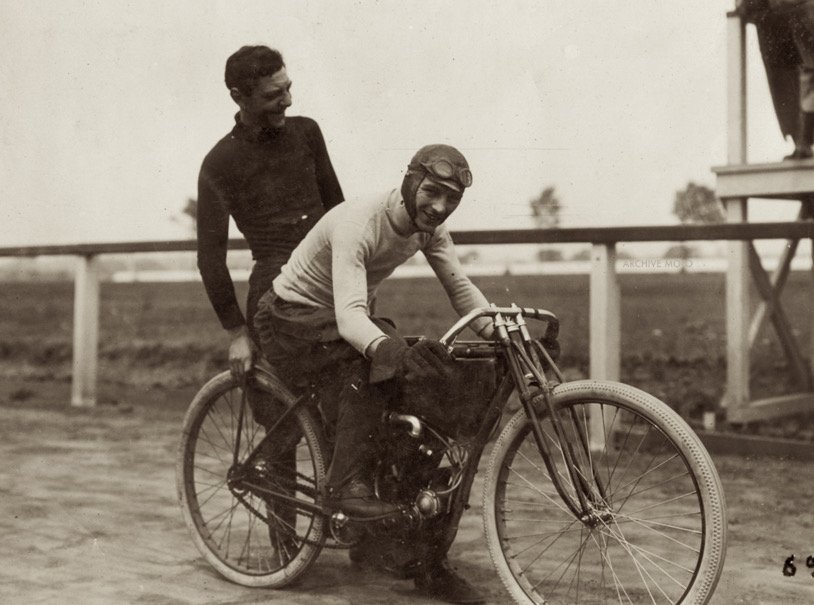
A southern privateer in early American motorcycle racing, here is Martin Schroeder showing off his factory works Harley-Davidson 11k racer after the 1914 F.A.M. Grand Prize 300-mile race in Savannah, Georgia. A Savannah local, Schroeder acted as Vice President of the Savannah Motorcycle Club and was an avid racer in regional events throughout the teens. Though not quite as rowdy as the later famed motorcycle clubs of the 1950s and 1960s, the Savannah Motorcycle Club had a reputation for being a rather irreverent bunch. As the reach and influence of the industry spread into the deep south, Schroeder helped clean up the club's reputation, aligning them with the F.A.M., and playing a prominent role in staging races in the area, including the 1913 and 1914 Savannah 300 endurance races. For the 1914 event, Harley-Davidson selected Schroeder as one of their factory-supported competitors, one of eight men who made up Harley's first-ever factory works team, the precursor to the Motor Company’s legendary Wrecking Crew.
The eternally lovely, fearless, and unwavering Miss Vivian B. Bales was a pioneer American adventurer who broke the mold of what it meant to be a woman and motorcyclist in the Roaring Twenties. Born in Wacissa, Florida, in 1908, Bales soon moved back to her parent’s original home in Albany, Georgia. Having a knack for her own creative side, the diminutive Bales was a free spirit from birth and determined to have her own adventures like those of Lindbergh and Earhart. However, being of little means in a small south Georgia town meant Bales would need to find her own route into a life of adventure. In 1926, Miss Bales graduated high school as one of 43 young girls in her class and worked as a ballet instructor, picking up extra money on the side as a seamstress. The money was good, even pulling in $300 after arranging and single-handedly producing a ballet recital, but it wasn't airplane money and the young Bales always kept an eye on the horizon.
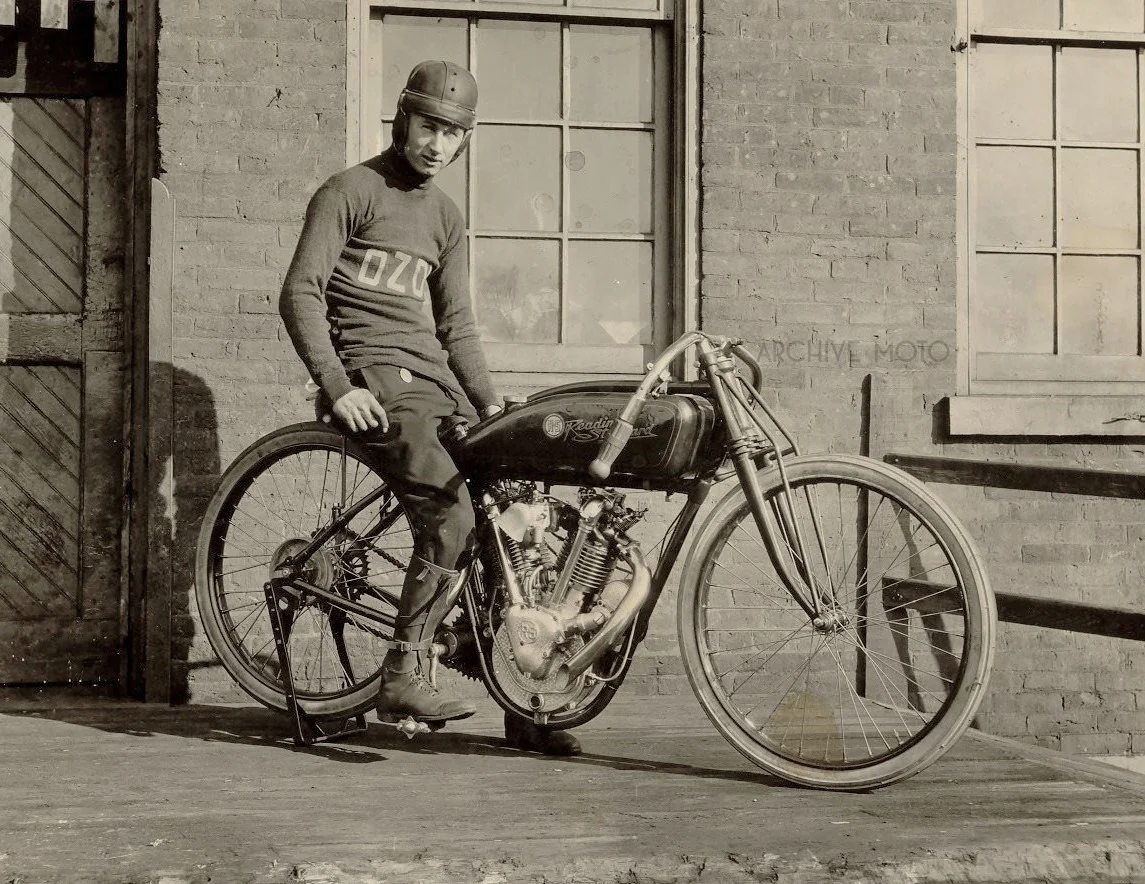
The amalgam of two innovative, yet ultimately defunct American motorcycle manufacturers, this rare, overhead-cam Reading Standard racing motorcycle simultaneously represented the height of early engineering and the death rattle of the first golden age of motorcycling. The early American motorcycle industry exploded with an abundance of options, with early enthusiasts having their choice from dozens of brands. Still, by 1920, the industry had dwindled to a small handful of marques as WWI marked the end of the line for any brand to have survived that first explosive decade. Commonly known as the "Big Three," Harley-Davidson, Indian, and Excelsior had scaled their companies beyond measure in the industry, parlaying a focus on manufacturing and dominance on the track into expansive distribution networks and record sales.