The eternally lovely, fearless, and unwavering Miss Vivian B. Bales was a pioneer American adventurer who broke the mold of what it meant to be a woman and motorcyclist in the Roaring Twenties. Born in Wacissa, Florida, in 1908, Bales soon moved back to her parent’s original home in Albany, Georgia. Having a knack for her own creative side, the diminutive Bales was a free spirit from birth and determined to have her own adventures like those of Lindbergh and Earhart. However, being of little means in a small south Georgia town meant Bales would need to find her own route into a life of adventure. In 1926, Miss Bales graduated high school as one of 43 young girls in her class and worked as a ballet instructor, picking up extra money on the side as a seamstress. The money was good, even pulling in $300 after arranging and single-handedly producing a ballet recital, but it wasn't airplane money and the young Bales always kept an eye on the horizon.
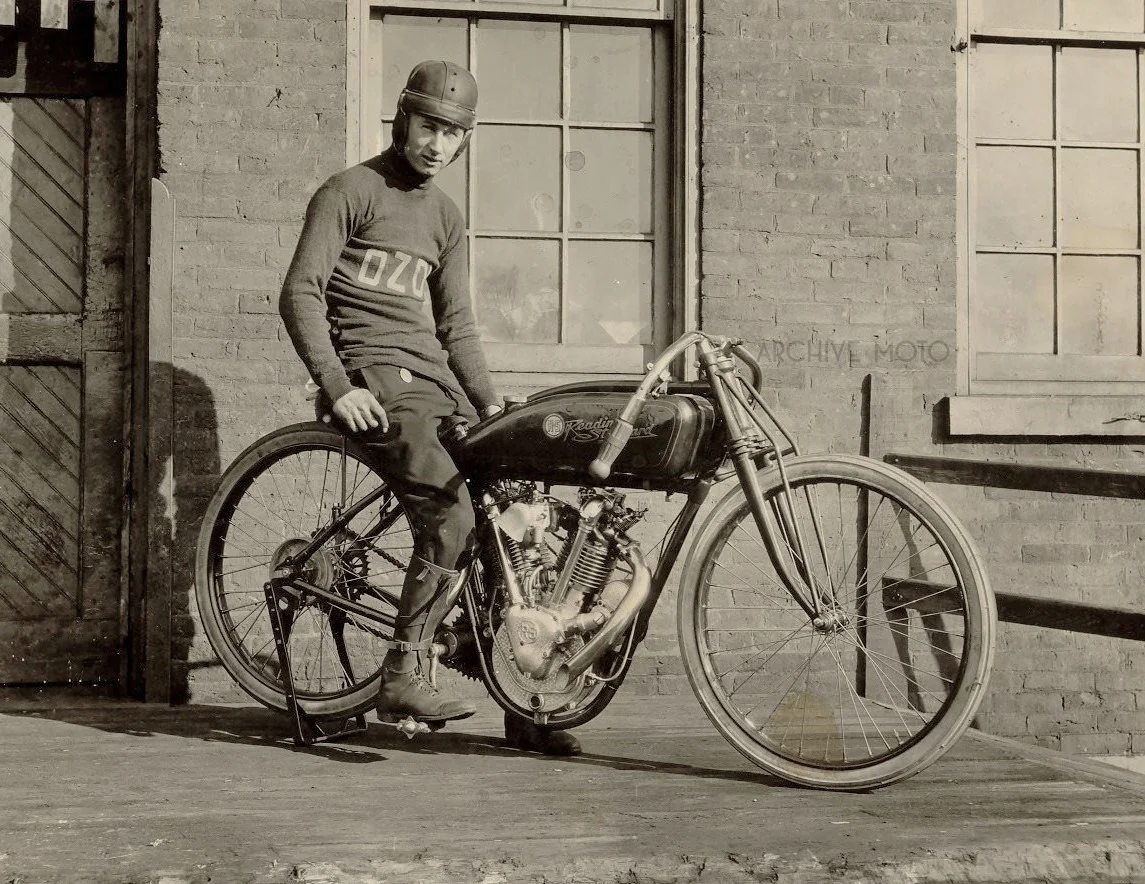
The amalgam of two innovative, yet ultimately defunct American motorcycle manufacturers, this rare, overhead-cam Reading Standard racing motorcycle simultaneously represented the height of early engineering and the death rattle of the first golden age of motorcycling. The early American motorcycle industry exploded with an abundance of options, with early enthusiasts having their choice from dozens of brands. Still, by 1920, the industry had dwindled to a small handful of marques as WWI marked the end of the line for any brand to have survived that first explosive decade. Commonly known as the "Big Three," Harley-Davidson, Indian, and Excelsior had scaled their companies beyond measure in the industry, parlaying a focus on manufacturing and dominance on the track into expansive distribution networks and record sales.
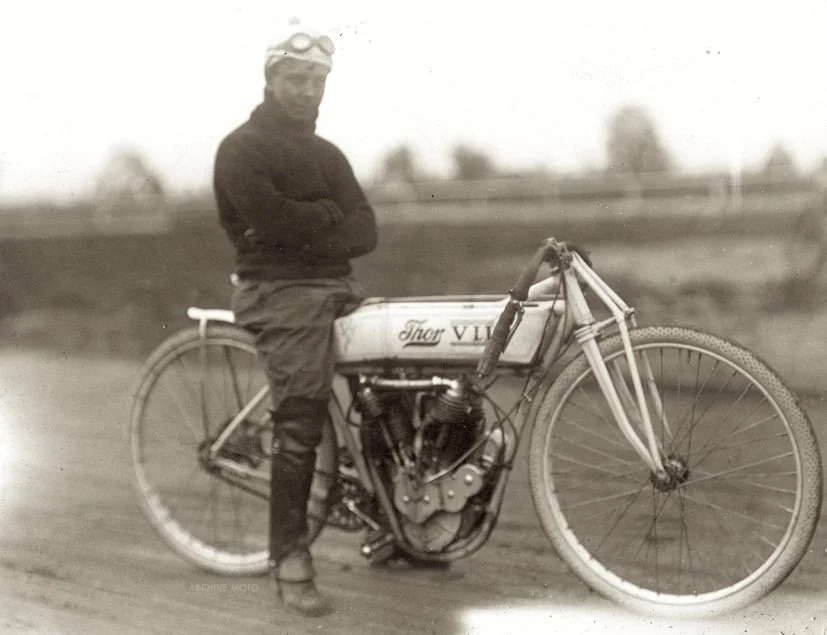
It is said that death rides a pale horse, but if you were racing motorcycles against a white Thor in around 1912, it wasn’t death but Shorty Matthews chasing you down. E. W. “Shorty” Matthews was a slight man, standing at only 5 feet tall and weighing in at around 110 pounds, his build was that of a Bull Terrier, and he was just as tenacious. Born outside of Denver just before the turn of the 20th century, Matthews made his way to California and began working as a mechanic before taking up motorcycle racing. He started running single-cylinder machines, most often made by Thor, around dirt tracks like L.A.’s Agriculture Park, but as soon as Jack Prince’s first board track motordrome, the Los Angeles Coliseum, opened, Matthews was on the line. With his small stature and steel nerve, Matthews took to the dirt and the boards equally well as one of the pioneers of the sport. Before long, his success captured the attention of the Aurora Automatic Machine and Tool Company, makers of the Thor brand, and Matthews began racing as a trade rider for the company in 1910.
Still a teenager in his first year of competition, Charlie Fearless Balke had experienced both the thrill of victory and the tragic potential of the perilous sport. His reputation at Agriculture Park had been firmly established. Even though the sport had only begun to take shape, the money he earned justified leaving his job at the Diamond Rubber Company to pursue life as one of America's original speed kings. Agriculture Park soon became a hotbed for racing in its earliest days, and riders across the country came to Los Angeles to compete. Charlie Balke, the scrappy and diminutive local sensation, was the man to beat.