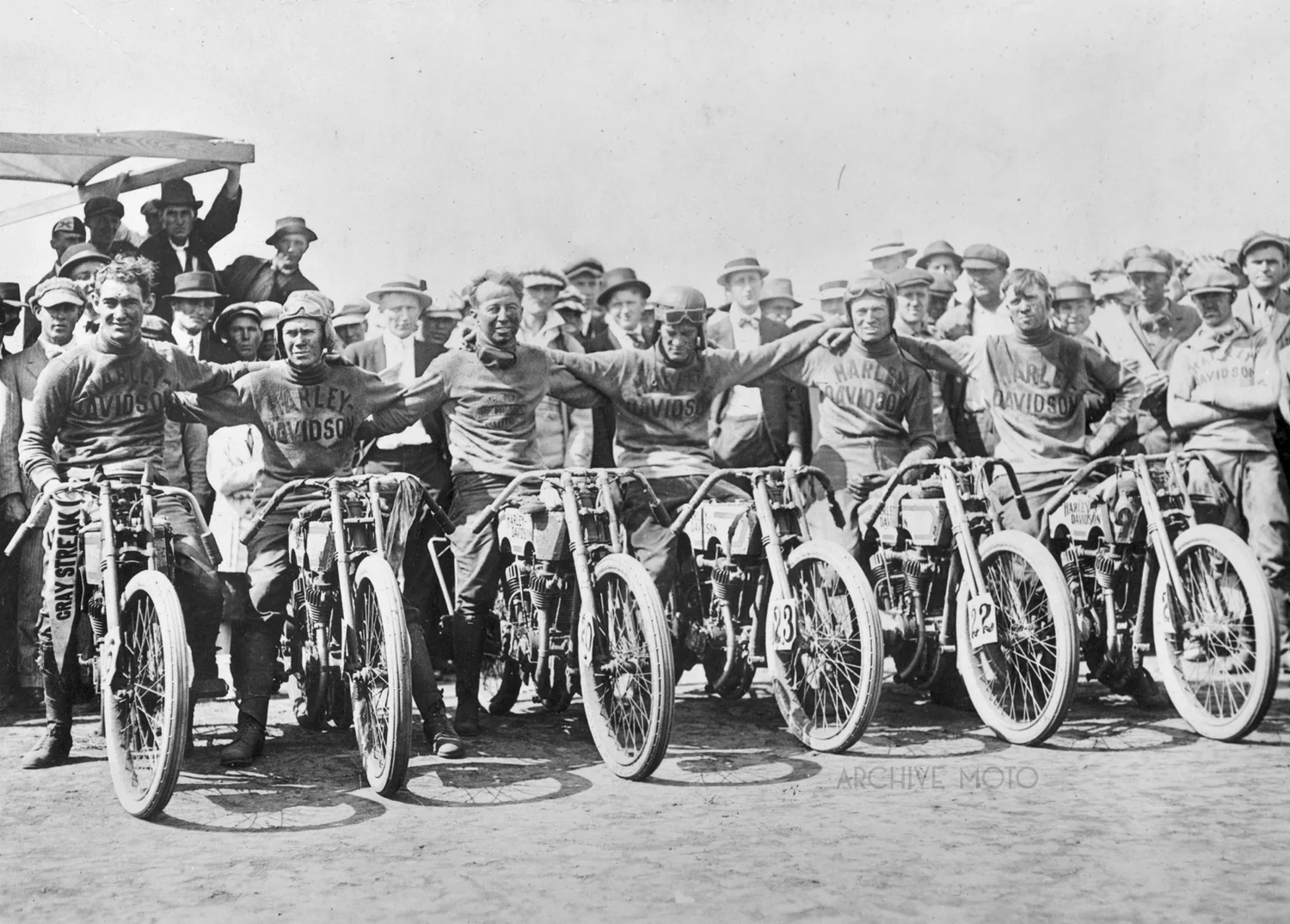
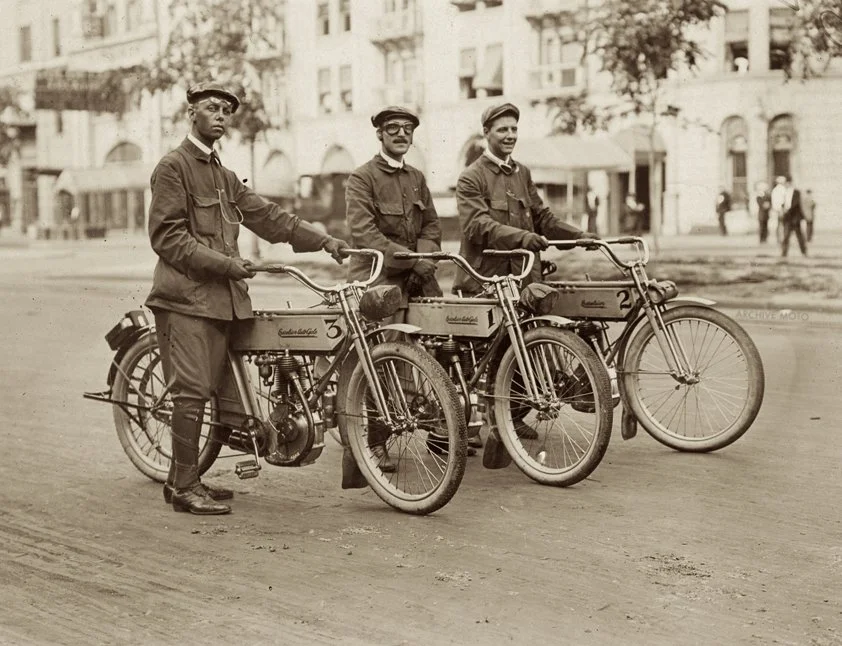
American motorcycling in 1908 was a whirlwind of excitement and opportunities. Throughout the country, new manufacturers flooded a hungry marketplace with ever-more capable machines. Motorcycling technology fueled an intensely competitive industry as novel features like coaster brakes, mechanical valves, multi-speed clutches, V-twin engines, and a loop frame chassis first emerged. The trade magazines overflowed with advertisements from budding companies, though most still focused on individual components rather than turnkey machines. Still, the earliest motorcycle manufacturers, brands like Light, Excelsior, and Thor, challenged the mighty Indian Motocycles, who dominated the industry seemingly from the start. In 1908 alone, Indian produced over 3,200 motorcycles, while other makers, like Milwaukee's Harley-Davidson, had yet to clear 500.
It was in May 1911 that Hedstrom's first "valve-in-head" racing special, commonly known now as the 8-Valve, debuted on the dirt tracks of the Northeastern circuit. Still, that August, Excelsior's new racer, the Big Valve 7, created in part with the expertise of the company's star rider Joe Wolters quickly challenged the perennially dominant Indian at the races. With Wolters in the saddle, the Excelsior 7 racked up victories, stealing record after record from Indian with its prowess on the timbers of America's motordromes. Hedstrom returned to his machine shop determined to return with a contender, and in November 1911, a new breed of 8-Valve, specifically engineered to lay waste to any who challenge debuted at the new saucer in Oakland, CA.
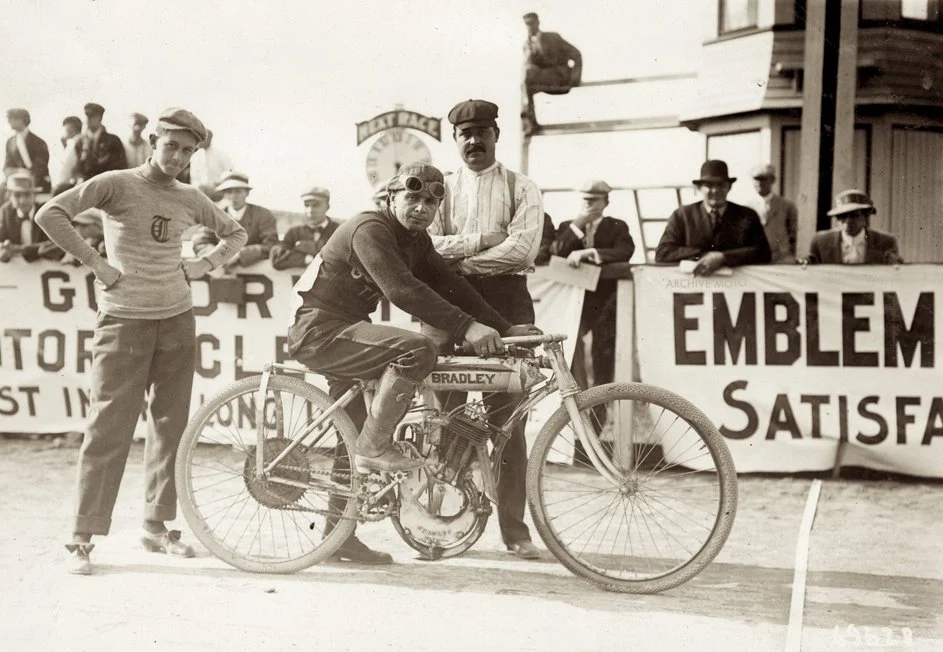
Charles E. Bradley first opened his shop at 269 Diamond Street in Philadelphia in 1901, running advertisements for an array of motorcycle components and bolt-on engines the following season. In 1904, Bradley began offering complete, Bradley-branded single-cylinder motorcycles as a special order from the shop. The machines were simple and similar to many early motorcycles, though the Bradley was host to numerous innovative features from the start. Instead of a traditional bicycle-style diamond frame, Bradley offered a loop-style cradle frame. Mechanically operated valves, chain drives, and combination controls for spark and compression soon followed. Perhaps most notable, however, was the 1904 Bradley Model C, which featured the first production side-valve or flathead engine configuration in the United States. Another unique feature of the Bradley was the transversely oriented camshaft, which was mounted across the top of the crankcases making the marque easily recognizable.
Part 1: Undeniably Fearless
It has been over a century since the last of America's infamous board track motordromes ran their final death-defying contests. Today, it is hard to grasp just how sensational it would have been to sit in the grandstands, watching men whip around the steep inclines of the country's timber bowls onboard raw, fire-breathing machines. In 1912, the height of the motordrome craze in the United States, the fastest the average citizen was ever accustomed to going would have been by train, topping out around 45 MPH. Yet, for the small cost of admission, most anyone could gather under the arc lights of their local board track saucer and watch men reach double that pace as they past in a blur. The age of the motordrome was nothing if not visceral. The tracks steeply banked walls of rough-sawn timber, laid on end, enclosed by guard rail posts and electric lights, often with wiring exposed that would potentially ignite any fuel source if clipped. The machines were geared for a single purpose, flat out speed, with no throttle, suspension, brakes, or transmissions—all power, all the time. And then there were the riders, men of true grit who mounted such beasts with little more protection than a wool sweater and leather cap. To compete was to be fearless, and one man, a pioneer of the sport, daring and competitive, personified the American motordrome racer to the degree that he became known simply as that; fearless.