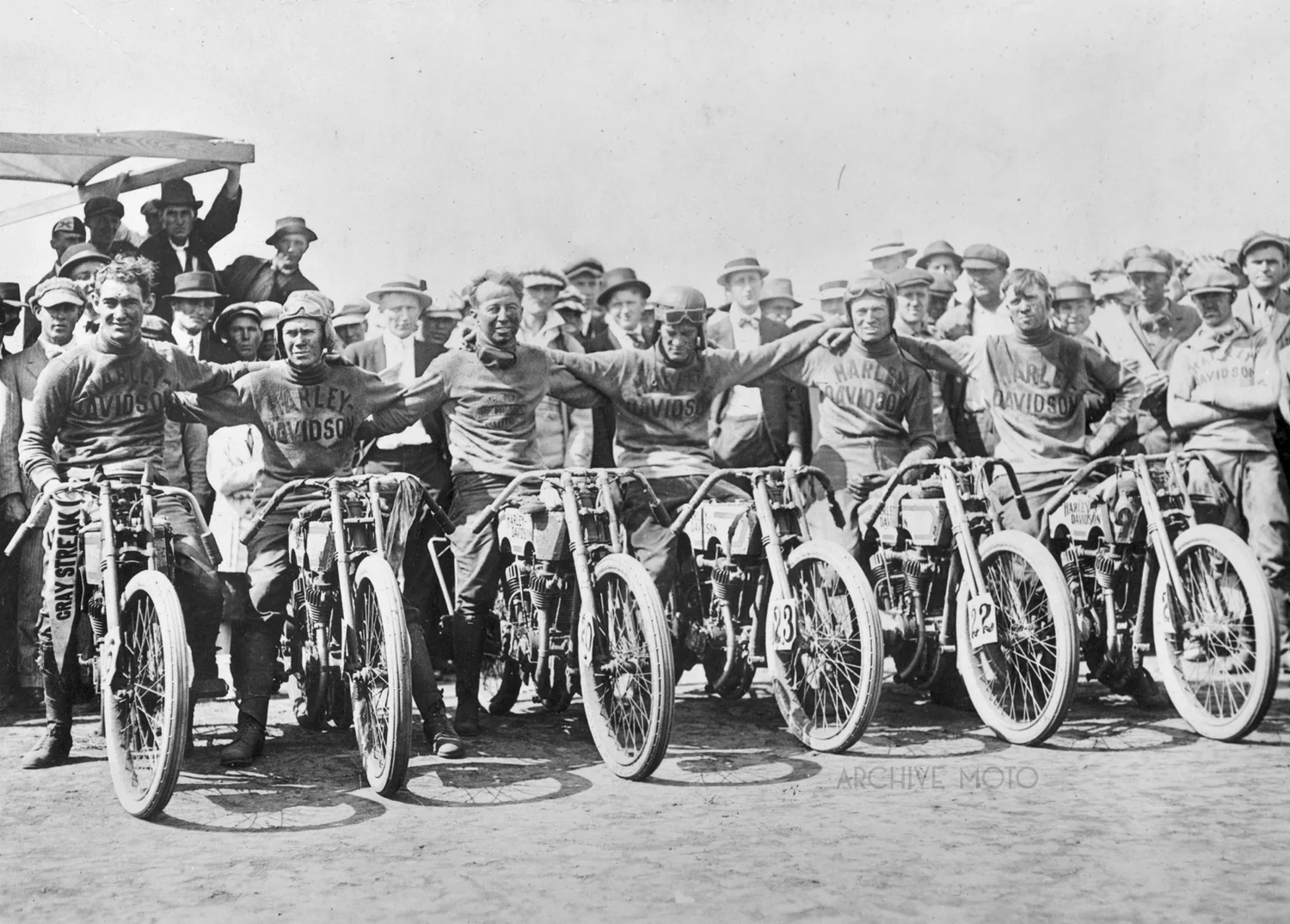
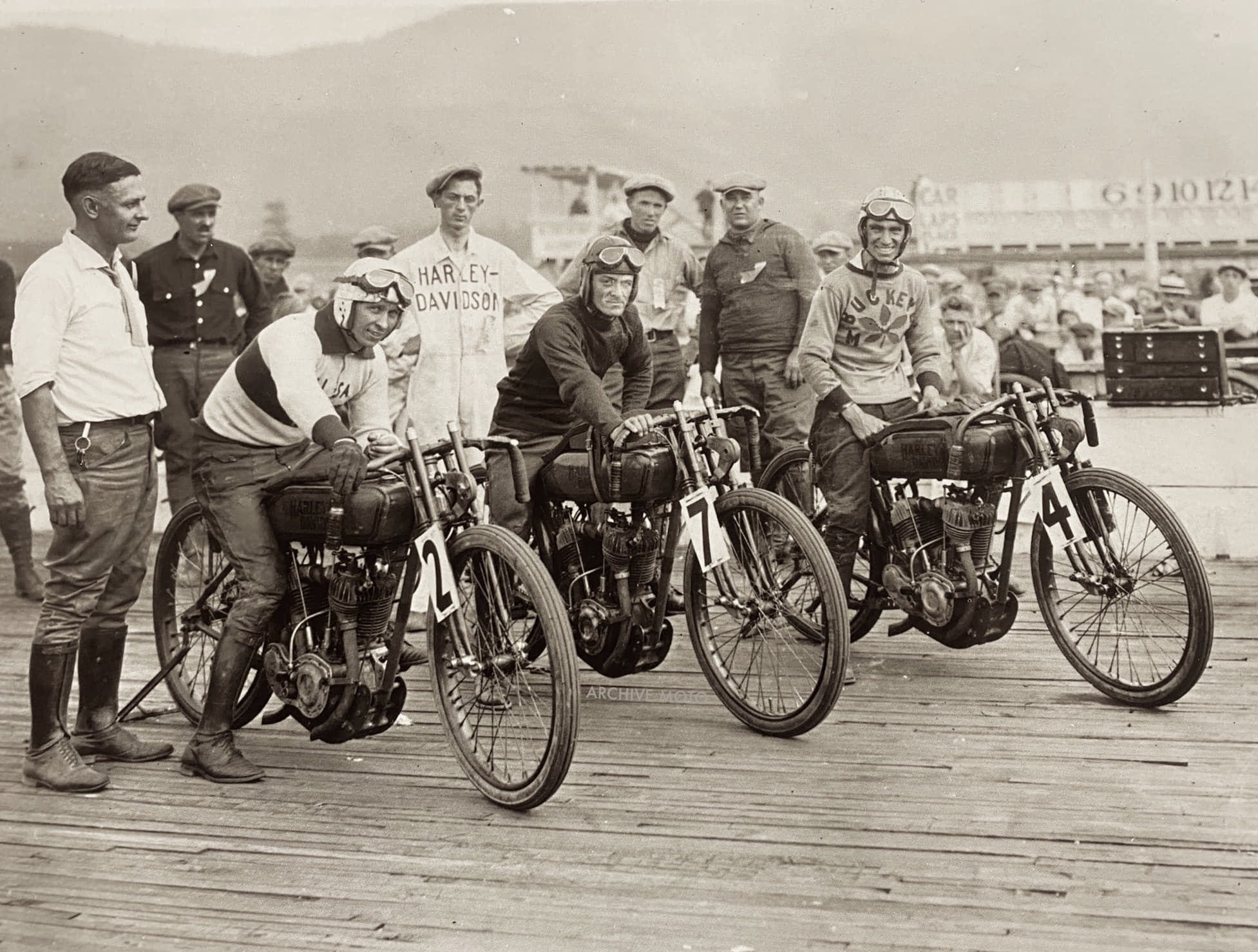
Straddled triumphantly atop their lightening fast Harley-Davidson Two-Cam racers, these legends of American motorcycle racing represented the last remnants of the Motor Company’s famed Wrecking Crew.
What a doozy this image was to research. For the few online resources where a copy could be uncovered, each claimed it had been taken at the Kansas City Speedway during one of the only four races ever held between 1922 and 1924. It was supposed to be an easy write-up, but as this history continues to remind us, so much has been lost or confused over the decades, and this photo had a quite different story to tell. As a result, there are entirely different stories written up, in just as much detail, about the inaugural race held at the Kansas City Speedway on September 3, 1923, as well as the final motorcycle event held the following summer, though neither bore this image.
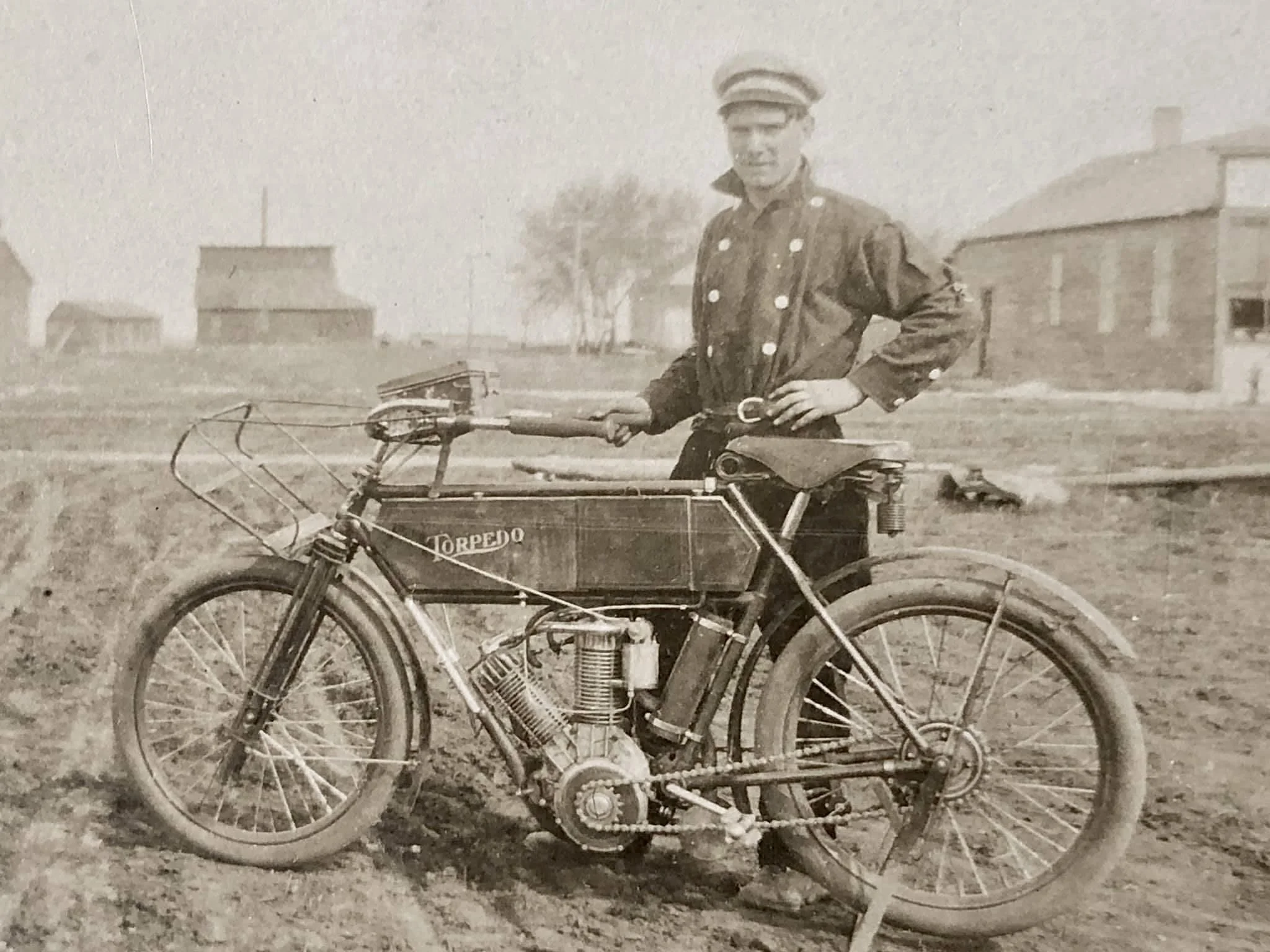
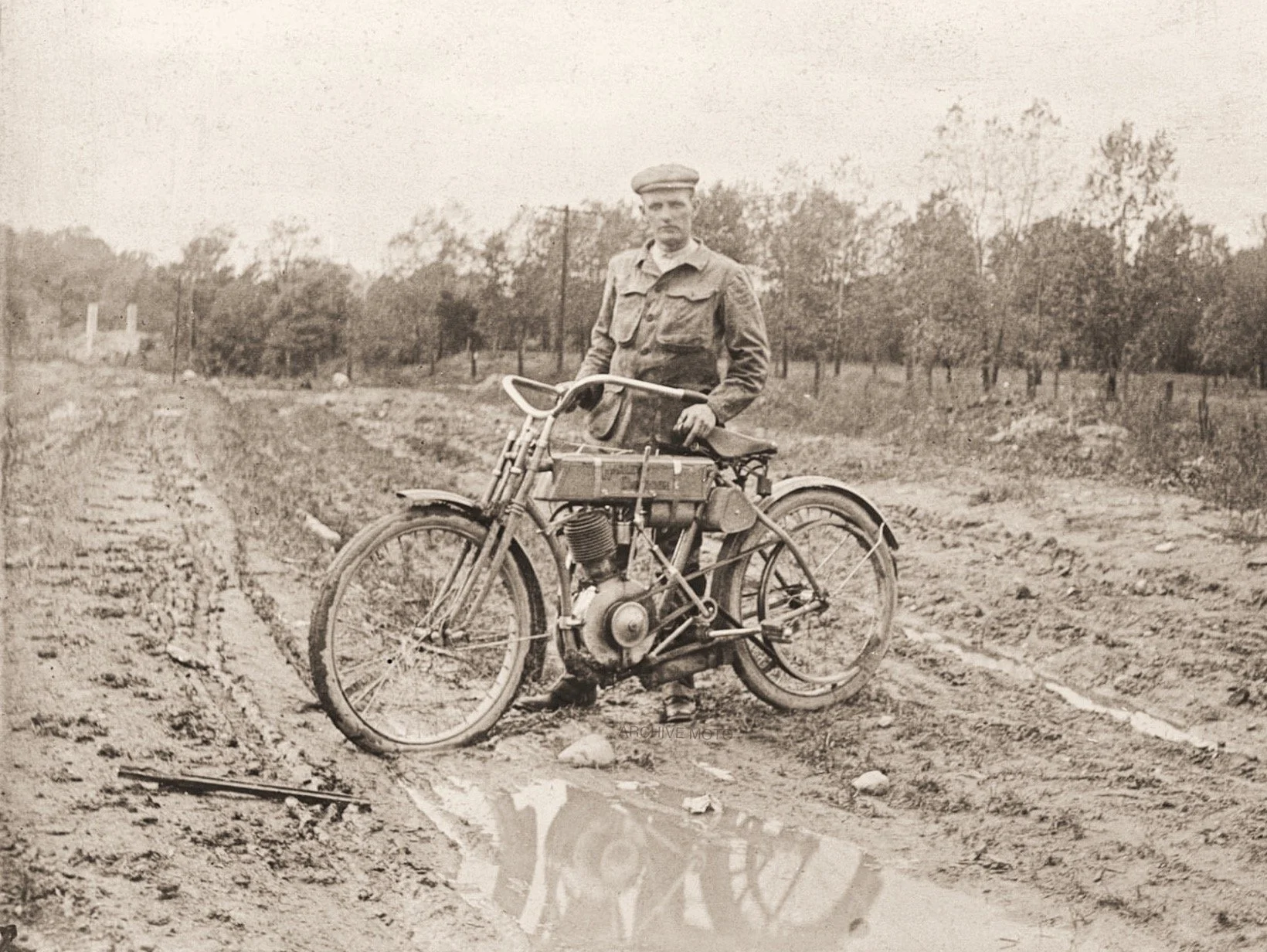
This strapping gent poses proudly behind his trusty Hornecker Torpedo, an exceedingly rare American marque that at one point was heralded as one of the best machines in the country. Founded in 1906 by George Hornecker, the Hornecker Motor Manufacturing Company began producing motorcycles from its factory in Whiting, Indiana, utilizing engines produced under the Hedstrom-Thor license. Hornecker was the son of German immigrants, initially working for Standard Oil at the turn of the 20th century. He soon parlayed his efforts into a thriving hardware store in Whiting, building upon his success by operating the town’s first telephone service and becoming a stakeholder in the First National Bank. Hornecker later served on the city council and still found the time to work as a volunteer firefighter before turning his attention to the motoring business.
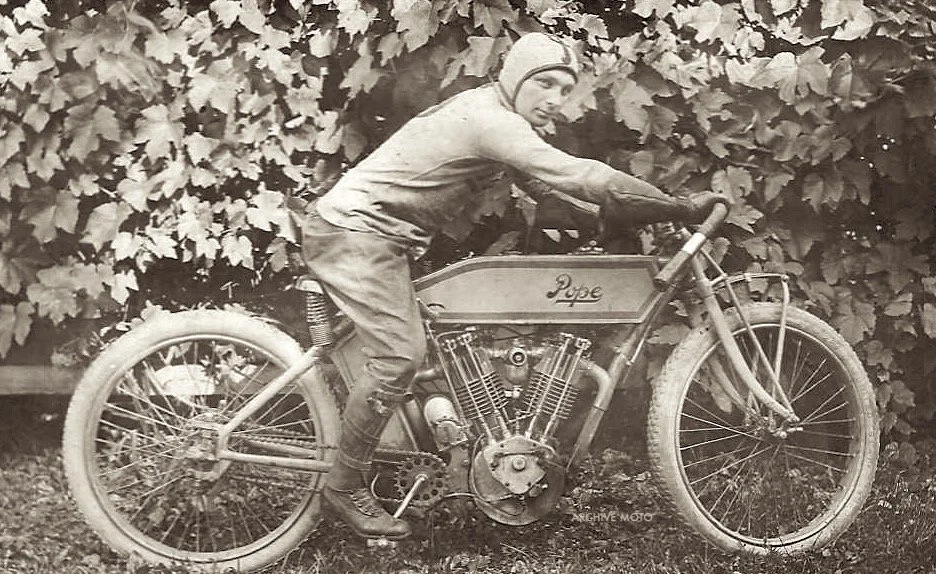
Though certainly not one of the best-known motorcycle manufacturers, Pope was a company on the cutting edge of the industry in its golden age. With roots dug deep into American history, the story of Pope motorcycles began during the Civil War. Albert Augustus Pope was a Brevet Lieutenant Colonel in the Union Army, a veteran of legendary campaigns at Fredericksburg, Vicksburg, and Antietam. Having saved the majority of his earnings while serving, Pope parlayed his modest nested into success in the northeast's business boom of reconstruction. In 1876, Pope took notice of the latest craze to have arrived in America from Great Britain, the bicycle and seized the opportunity to begin manufacturing his own brand of bicycles under the marquee of Columbia. His venture was an exceptional success, making Pope the undisputed king of the American bicycle industry. Pope Manufacturing Company held a monopolistic stake in the cycling industry, helped pioneer mass production techniques, and had also been an early player in American automobile production. Having pioneered American bicycling culture through manufacturing, racing, and lobbying for better roads, Col. Pope passed his company and legacy on to his son, Albert Jr., when he died in 1909. Though much of early American motorcycle culture owes its foothold to cycling magnates like Col. Albert Pope, the legacy of the Pope motorcycle rests with his son.
"Roads? Where we're going, we don't need roads." That may have been the case for time machines in 1985, but in 1906, most everyone in America desperately wished they had a decent road or two. The turn of the 20th century was a time of significant change in America, a moment when the country first began its transition into its modern form. It was a technological renaissance, a time of social, economic, and political growth which resulted in the emergence of American culture as we know it today. Within the bloom were new modes of transportation, giving birth to new industries, sports, and recreation. The rapid pace of change and innovation brought a need for new infrastructure. As was the case with much of the motorcycling world at the time, the roots of development and progress rest deep in the culture of bicycling.