Ray Weishaar, Harley-Davidson 11KR, Savannah 300 1914

1 Comment

Ray Weishaar, Harley-Davidson 11KR, Savannah 300 1914

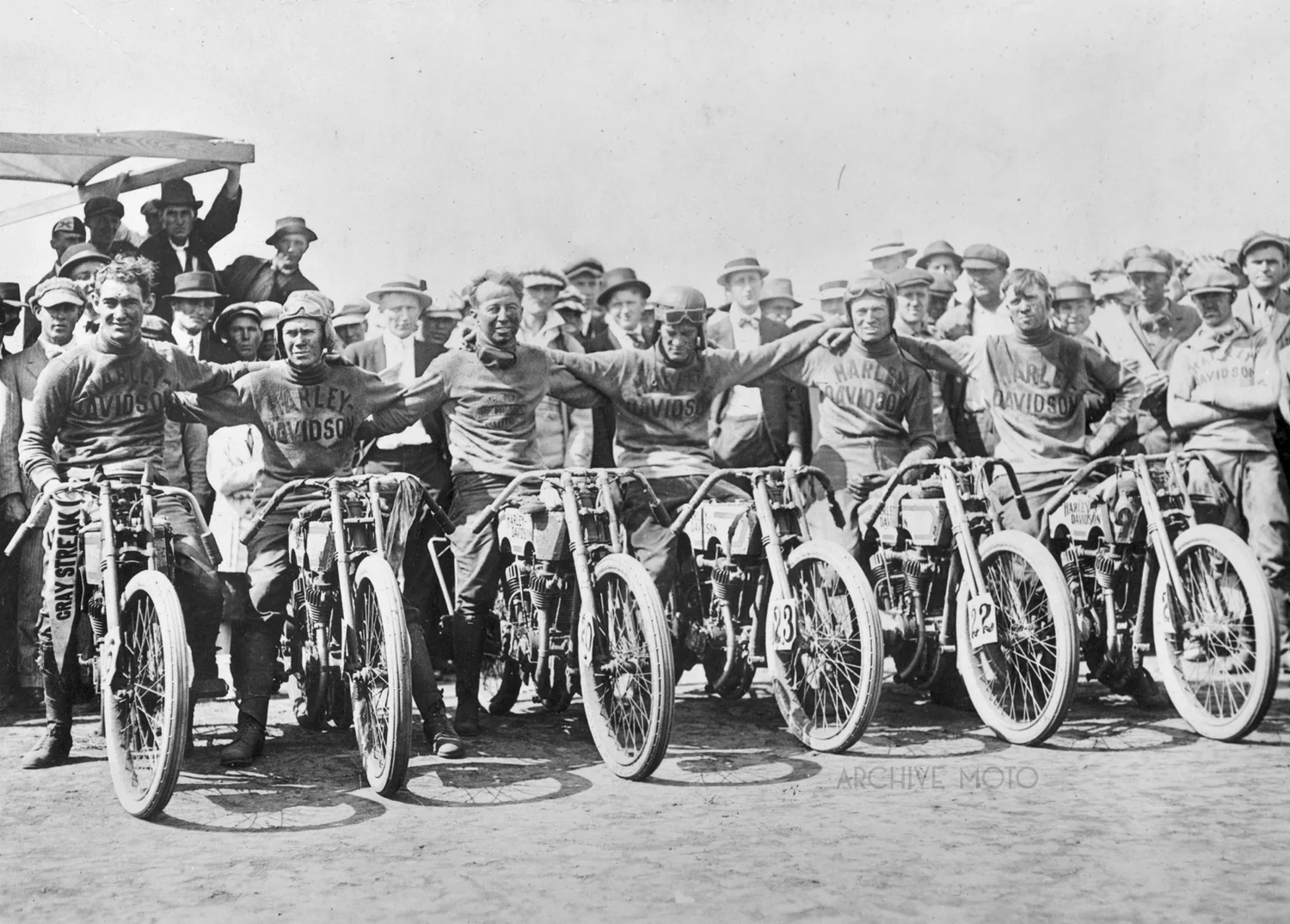
Ray Weishaar and his Harley-Davidson 11KR factory road racer in Savannah, Georgia on Thanksgiving Day, November 26, 1914.

In celebration of the 1914 Thanksgiving Day American Classic Championship, also known as the 2nd Annual Savannah 300, this week’s posts will cover a bit more detail on that historic event. The daunting 300-mile road race took place beneath the eerie canopy of Savannah’s centuries-old oak trees which drip with Spanish moss onto the sandy roads of Savannah’s Grand Prize circuit. Covered in numerous articles at ArchiveMoto.com as well as detailed in the pages of Georgia Motorcycle History, the event marked a turning point in the course of American motorcycle racing history as it was the event chosen by the now quintessentially American motorcycle brand Harley-Davidson to debut their first officiall factory racing program featuring their newly developed purebred factory racer, the 11K.


Having been steadily making a name for himself since 1908, Lawrence Ray Weishaar arose out of the county fair 1/2-mile circuit in Kansas and onto the national stage. By the Fall of 1914 the “Kansas Cyclone,” as he became known was a solid choice for Harley-Davidson’s factory racing program director Bill Ottoway to recruit for the debut Savannah team. Weishaar had ridden Indians and Excelsiors to great success, but his debut with the powerful and nimble new factory 11K machine solidified his relationship with Harley-Davidson, one which would last the rest of his days, turning both Weihsaar and Harley-Davidson into American icons.


For a new professional on a new factory team running a new prototype racer Weishaar exploded off of the line in Savannah to the delight of the crowd. His first laps were among the fastest in the pack, but by his third lap his time had more than doubled, believing that he had snapped a valve or valve spring Weishaar pulled into the pits. Valves and springs all checked out, but the valve seat of Ray’s front cylinder was covered in molten glass, the result of shards from a busted sparkplug having made their way onto the seat and melting. The repairs that were possible were made and Weishaar charged the course once again. Throughout the new H-D team spark plugs proved a constant issue, the hot and fast motors of the 11K were melting glass plugs every few laps, but despite numerous stops for plugs, oil, and fuel Weishaar consistently shaved time off of each lap hitting average speeds of 72mph on Savannah’s soft sandy roads. He was so effortlessly fast that a bystander was quoted as saying that he could have easily taken first place had the event been a 500 mile rather than a 300. However, on the 24th lap, with only 3 laps remaining Weishaar pitted with a leaking ding in his fuel tank and was flagged out due to concerns over fire. His teammate Irving Janke went on to claim 3rd place, coming in behind Excelsior’s Joe Wolters in 2nd and Indian’s Lee Taylor in 1st, but the result was the first of countless podium positions to come for Harley-Davidson after having officially tossed their hat into the professional racing game on Thanksgiving Day, Novemeber 26, 1914.

1 Comment

Patti Waggin', Burlesque Dancer and Motorcycle Queen

Comment

Patti Waggin', Burlesque Dancer and Motorcycle Queen

The eloquent Patti Waggin’, a burlesque star from the 1940’s and 50’s ripping her little Indian Scout over the hills of Northern California sometime shortly after the war. A welcome sight on the stage as well as at the finish line, Patti was admired for being just as comfortable in the saddle as she was in a pair of pasties. At the time that this photo was taken she was married to a prominent AMA Class C flat track racer and original Booze Fighter named Bill Brownell. Bill was one of the talented members of the Hap Jones racing team, the bay area’s Indian dealer and later went on to run his own shop based in Chico. 


My little red 1941 Indian Scout came from Bill’s garage and is remarkably similar to the one Patti is catching air on in this photo, and thanks to the research of guys like Panhead Jim and Terry Cavender I am fortunate to know a great deal of history behind the machine that I ride. Jim just posted a wonderful article about Patti which can be found at rideapart.com, and Terry put together another great piece on Bill and how his machine came into the hands of a dope like me, you can find that one at thebikersgarage.wordpress.com

Comment

Helen Glenn, Mercer University ca. 1934

2 Comments

Helen Glenn, Mercer University ca. 1934

image.jpg

A young sorority girl from Mercer University in Macon, Georgia sitting on top of a tricked out Indian Four ca. 1934. Was she the president of her house at Alpha Delta Pi, or president of the Co-Ed Athletic Association, maybe the head of the cheerleading squad, or the editor of the university newspaper? As a matter of fact she held all of those titles, as well as almost a dozen more during her very active years at Mercer. Now 98 years young, Helen Glenn is the daughter of pioneer board track racer, Indian dealer, and the South's motorcycling ambassador Harry Glenn. Being raised by a man who had a lust for motorcycles and an addiction to speed it is no surprise that young Helen was a quick one in the saddle herself. In fact, it was her father Harry who proclaimed that Helen was a just as fast as Barney Oldfield, just prettier. Not just another sorority girl batting her eyes on someone else's bike, this is the mighty Helen Glenn and her customized Indian Four just before she took off, weaving through the streets of Macon in order to lead the Mercer Homecoming Parade.


See more photos and read the stories of Helen and her family, including those of her father, the legendary Harry Glenn in the pages of Georgia Motorcycle History, available now in the Archive Store Here!

2 Comments

US Marine, Submarine Hunter, Azores, 1918

Comment

US Marine, Submarine Hunter, Azores, 1918

It was on this day 241 years ago that the leadership of a rebellious British colony approved a resolution which formed two battalions of fighters specifically trained to fight for our independence on land and at sea. Today all of America celebrates the exemplary men and women, both past and present of our United States Marines Corps.


It was America’s involvement in World War I that prompted the US Marine Corps to begin expanding their aviation division, creating two separate air-based forces. In early 1918 The First Marine Air Squadron was deployed to France to engage in areal combat, the second division, the First Marine Aeronautic Company was deployed to the naval base at Ponta Delgado in the Azores. This unit, comprised of nearly 150 men was charged with the task of hunting submarines in the mid-Atlantic, and the young Marine in this photo, posing proudly with his government issue Indian Power Plus was taken at that base in the Azores during the deployment of 1918. However, by November 11, 1918, the Great War was over, and after only a year long deployment the Marines stationed at the Azores and across Europe returned home, bringing with them the admiration of the world as well as a new nickname, “Devil Dogs” as given to them by their German adversaries at the Battle of Belleau Wood.


“I am convinced there is no smarter, handier or more adaptable body of troops (U.S. Marines) in the world…Always spick and span, ready at an instant's notice for duty, the nation owes them a great debt.” - Winston Churchill, 1917.

Comment