Man's Best Friend 1912

Comment

Man's Best Friend 1912

image.jpg

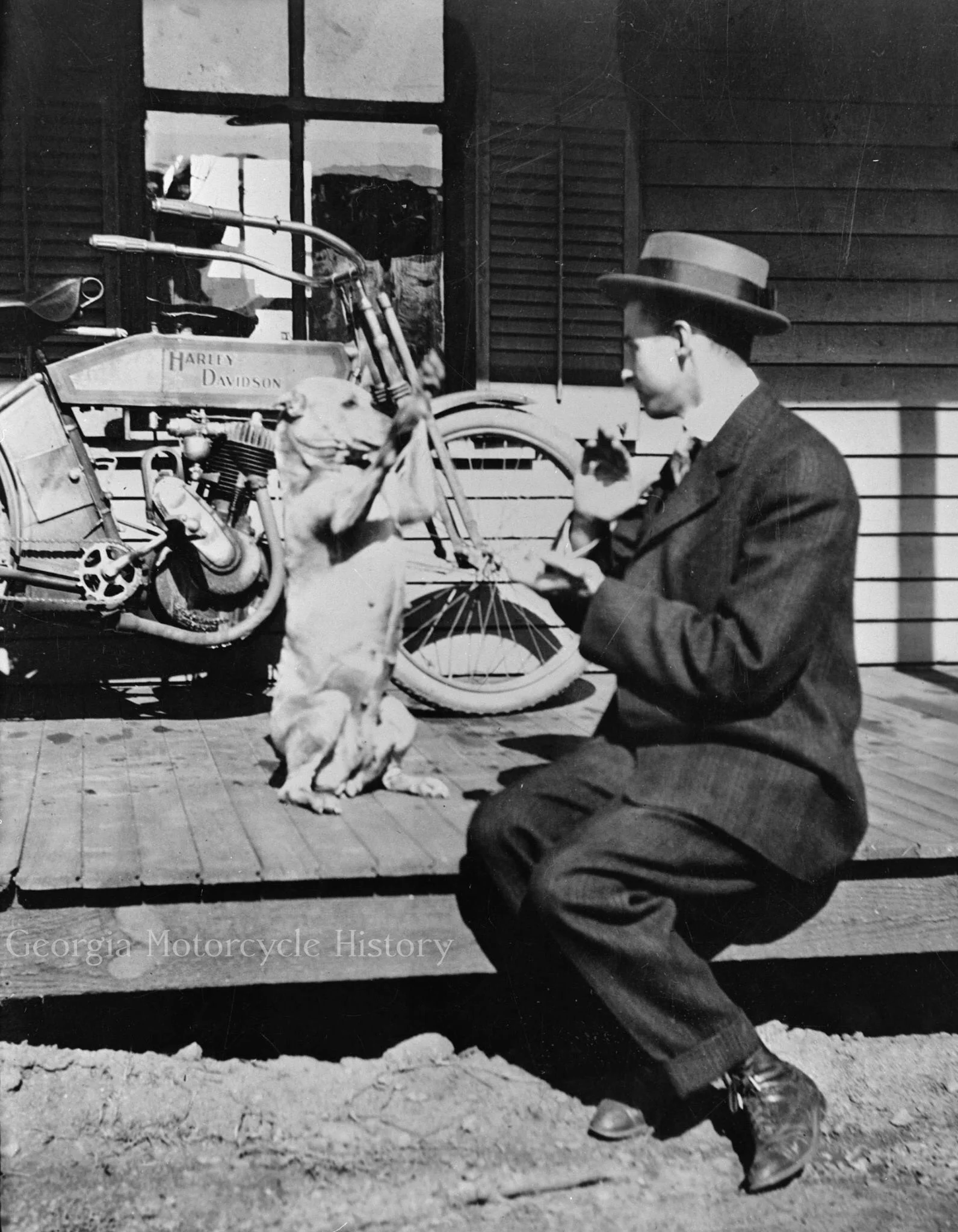
Another one of my favorite shots from the book. Here, a well appointed gentleman teaches his dog a few new tricks on the front porch of his home in Athens, Georgia. In the background sits what appears to be a 1912 Harley-Davidson x8a belt-driven single, affectionately known as the "Silent Gray Fellow" for its Renault Grey paint job and efficient 30ci, 4hp engine. The x in the name indicates that this model was equipped with Harley's brand new "Free Wheel Control" clutch setup, a new feature for 1912 along with the introduction of the "Ful-Floeting Seat," a long spring enclosed in the down tube of the frame giving the seat post and sprung saddle a full 4 inches of travel.


This is just one of the over 200 remarkable and exclusive photographs included in Georgia Motorcycle History: The First 60 Years 1899-1959. The high quality hard cover book details the early years of motorcycling history through rare and never-before seen photos making it a great gift idea for any motorcycling enthusiast. Order yours today in the web store at the top of the page.

Comment

Wigwam vs. Wrecking Crew

Comment

Wigwam vs. Wrecking Crew

image.jpg

The steadfast, raw spirit that could be found in the ranks of Indian’s Wigwam factory racing team and Harley-Davidson’s Wrecking Crew first defined what it meant to be a professional motorcycle racer in America and became a cornerstone attribute of our culture. These two factory teams split nearly evenly a dominating ownership of America’s Golden Age of racing between 1907 and 1925.


Indian and the men of the Wigwam team were relentlessly victorious in those first years, the infamous age of the motordrome while the brass at Harley-Davidson chose to simply observe the birth of the sport. But in 1914, when the Motor Co. finally began to assemble their factory racing program led by Bill Ottaway they would prove to be a force to be reckoned with. And so began an all American rivalry, one which reached a fever pitch in the early 1920’s when both teams boasted rosters made entirely of legends, one which stretched through to the Class C flat track gridirons of the 1940’s and 50’s.In iconic competition for decades, the men of the Wigwam and the Wrecking Crew traded places at the top countless times, but after Indian fell too far behind in the business world it was Harley that was left alone, unchallenged to claim the crown as the American motorcycle brand.


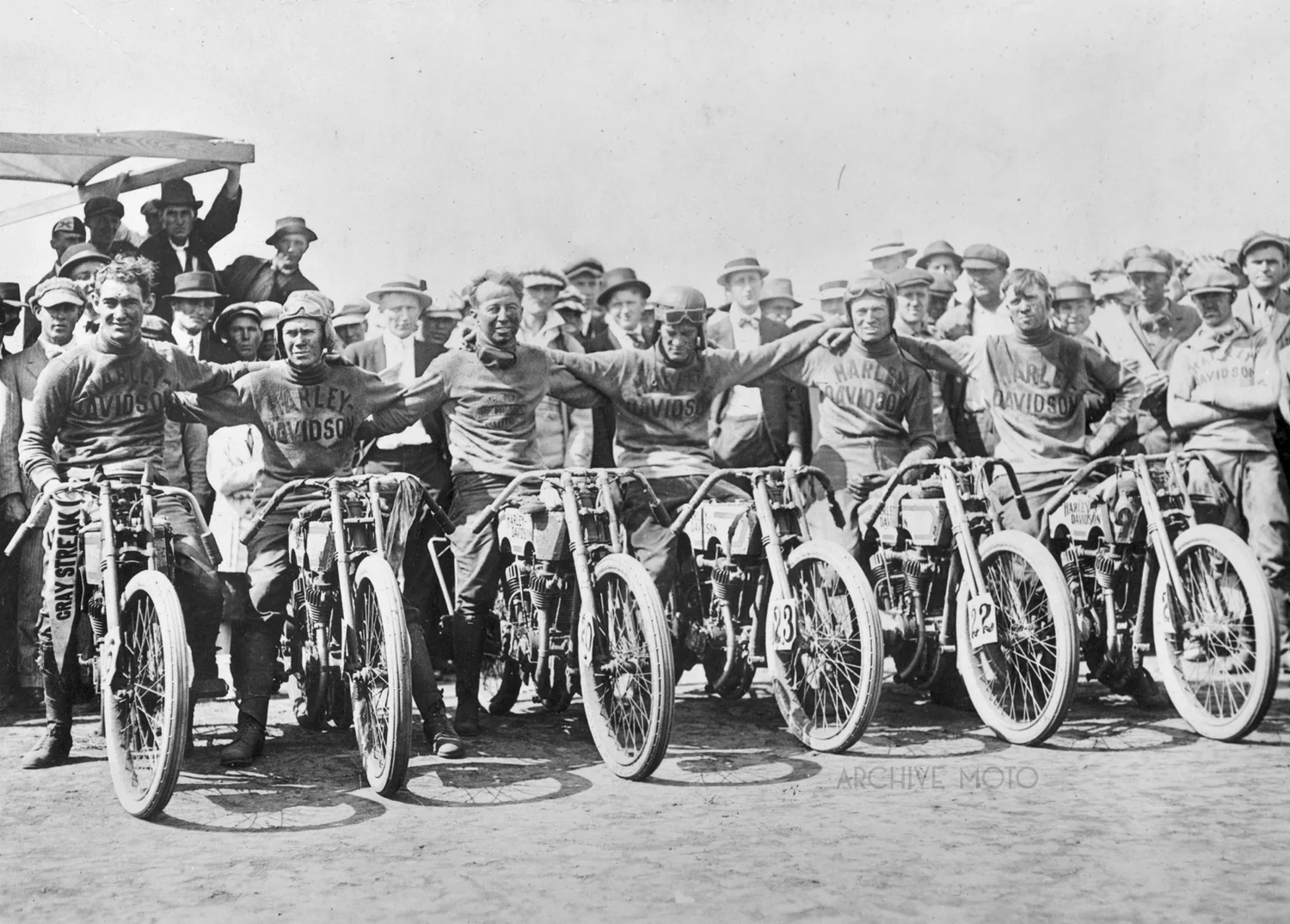
Here are the men of Indian's Wigwam at the Fort Erie Championship races of 1911, and what would become the Harley-Davidson Wrecking Crew after their triumphant showing at the 1915 Dodge City race.


I’ve been working on something new, something that I think you folks will dig. Im excited to share it with you soon and will have everything wrapped up in the next few weeks and exclusively available in our store. So until then all you need to do is ask yourself which team you are you, The Wigwam or the Wrecking Crew?

Comment

Emblem Racing Team, 1911

2 Comments

Emblem Racing Team, 1911

image.jpg

The Emblem Manufacturing Company, makers of motorcycles by the same name is yet another of the countless forgotten motorcycle brands of the initial production boom at the beginning of the 20th century. Emblem began production in 1907, the very same year as the incorporation of the now omnipresent Harley-Davidson Motor Company, but unlike America’s most recognizable motorcycle brand Emblem has been left all but forgotten in the margins of American motorcycle history.


Emblem motorcycles were manufactured just outside of Buffalo, NY in the town of Angola between 1907 and 1925, however the company ceased American distribution in 1917. Emblem also fielded a race team, though the factory works racers were more stripped stock machines than specifically engineered racing motorcycles. However the team, which was led by the talented Lee S. Taylor was able to produce a few notable accomplishments along the way including a record 35 hour run between New York and Chicago set by team member Maurice E. Gale in 1910, and Lee Taylor’s 100-mile record for a belt driven single averaging 48.7 mph in 1912.


Here is the Emblem factory team captured at the FAM Championship races held at the Fort Erie dirt track, July 14th and 15th, 1911. Team captain Lee Taylor found the highest point on the podium placing 2nd in the 10-mile stripped stock twin class event,  and a handful of 3rd place finishes were split between him and Frank Valiant, but the Emblem boys couldn’t seem to break the typical domination of the Indian team. Unfortunately, I cannot identify the gentleman on the far right in the CMC jersey (which is driving me crazy), but the remaining gentlemen, left to right are  Maurice E. Gale, Lee S. Taylor, and Frank L. Valiant posing behind one of the factory twin racers.

2 Comments

Harry Glenn, circa 1911

2 Comments

Harry Glenn, circa 1911

image.jpg

Harry James Glenn circa 1911. A single photo of Harry kicked off my amazing journey researching the origins of American motorcycle culture. Harry was a racer and a salesman, a promoter and an enthusiast, a mentor and a shriner, a father, a husband, and most of all a kind hearted ambassador of our motorcycle culture from its very beginning. Harry's innumerable accomplishments were collected and preserved within his scrapbooks, which his grandson has so graciously allowed me to share with our community through both my book Georgia Motorcycle History, as well as my ongoing project Archive Moto. Harry has continued to inspire enthusiasts for over a century and as a result I am completing his nomination packets today for induction to the Georgia Racing Hall of Fame and the AMA Motorcycle Hall of Fame. Harry spent his life in the saddle of an Indian motorcycle, spreading his  passion for the machines as well as the sport of racing across the country, and with any luck his legacy will be preserved alongside the other legendary pioneers of our culture.

2 Comments