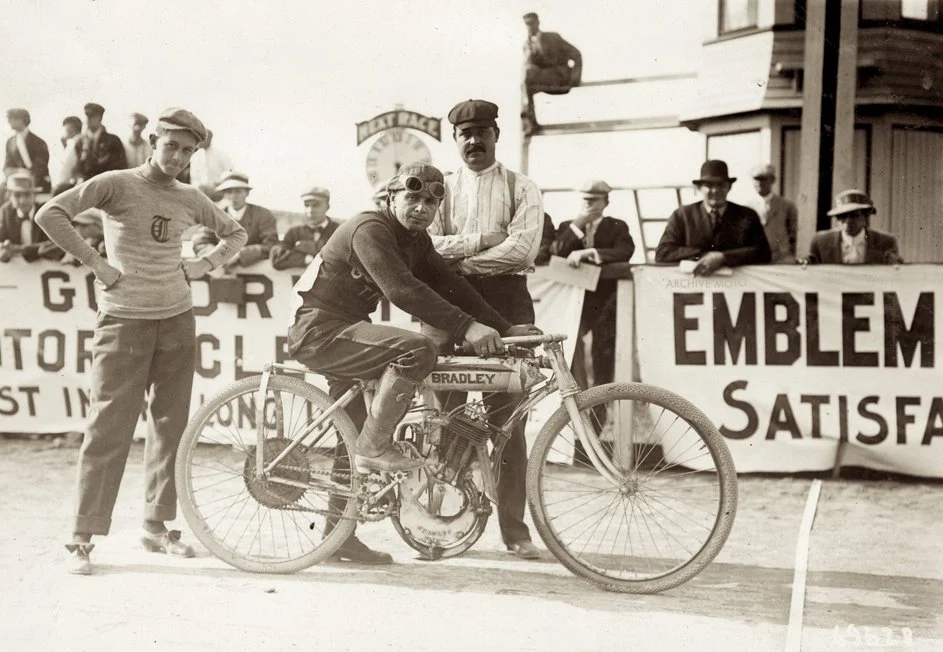
Charles E. Bradley first opened his shop at 269 Diamond Street in Philadelphia in 1901, running advertisements for an array of motorcycle components and bolt-on engines the following season. In 1904, Bradley began offering complete, Bradley-branded single-cylinder motorcycles as a special order from the shop. The machines were simple and similar to many early motorcycles, though the Bradley was host to numerous innovative features from the start. Instead of a traditional bicycle-style diamond frame, Bradley offered a loop-style cradle frame. Mechanically operated valves, chain drives, and combination controls for spark and compression soon followed. Perhaps most notable, however, was the 1904 Bradley Model C, which featured the first production side-valve or flathead engine configuration in the United States. Another unique feature of the Bradley was the transversely oriented camshaft, which was mounted across the top of the crankcases making the marque easily recognizable.
Part 1: Undeniably Fearless
It has been over a century since the last of America's infamous board track motordromes ran their final death-defying contests. Today, it is hard to grasp just how sensational it would have been to sit in the grandstands, watching men whip around the steep inclines of the country's timber bowls onboard raw, fire-breathing machines. In 1912, the height of the motordrome craze in the United States, the fastest the average citizen was ever accustomed to going would have been by train, topping out around 45 MPH. Yet, for the small cost of admission, most anyone could gather under the arc lights of their local board track saucer and watch men reach double that pace as they past in a blur. The age of the motordrome was nothing if not visceral. The tracks steeply banked walls of rough-sawn timber, laid on end, enclosed by guard rail posts and electric lights, often with wiring exposed that would potentially ignite any fuel source if clipped. The machines were geared for a single purpose, flat out speed, with no throttle, suspension, brakes, or transmissions—all power, all the time. And then there were the riders, men of true grit who mounted such beasts with little more protection than a wool sweater and leather cap. To compete was to be fearless, and one man, a pioneer of the sport, daring and competitive, personified the American motordrome racer to the degree that he became known simply as that; fearless.
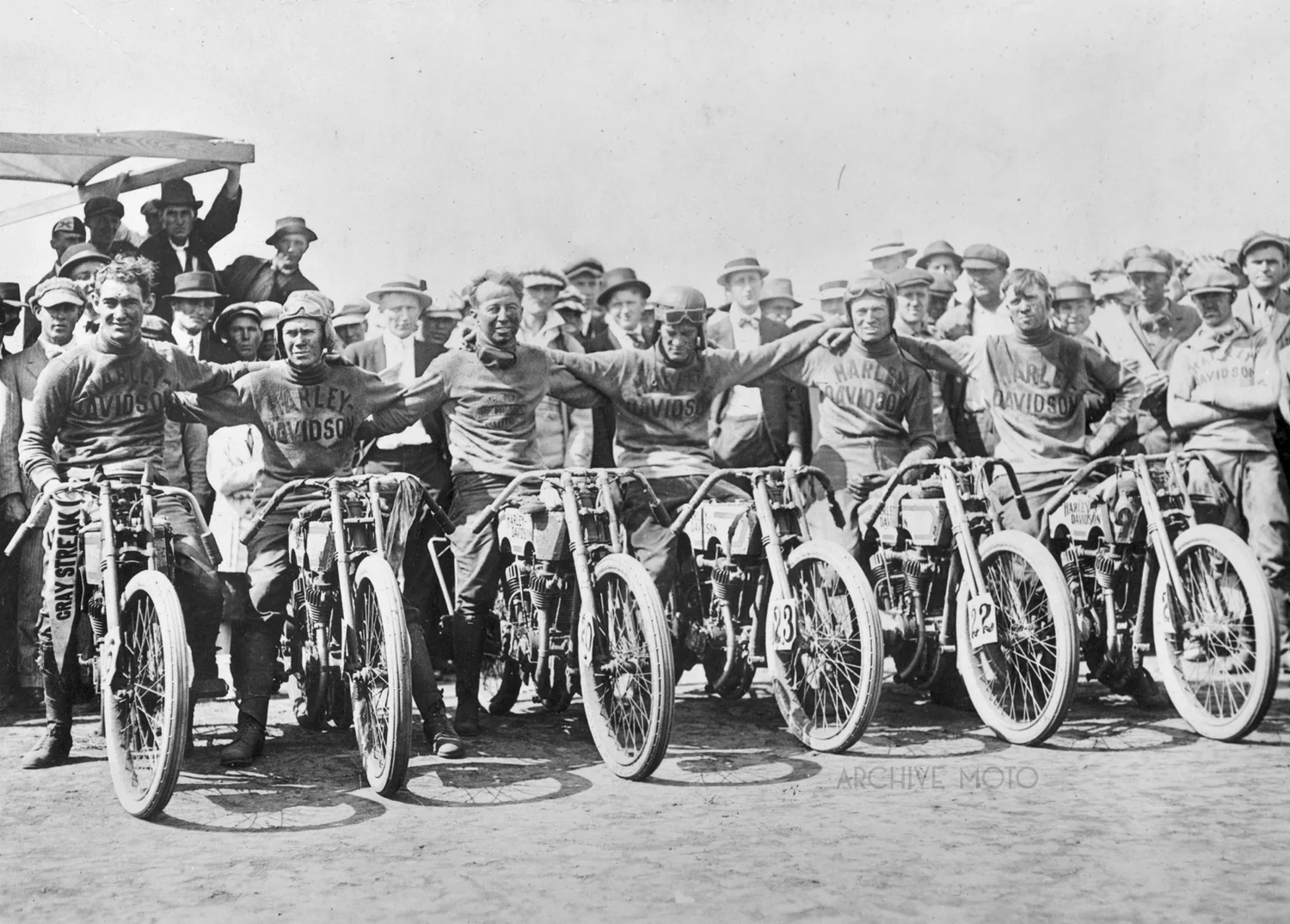
Straddled triumphantly atop their lightening fast Harley-Davidson Two-Cam racers, these legends of American motorcycle racing represented the last remnants of the Motor Company’s famed Wrecking Crew.
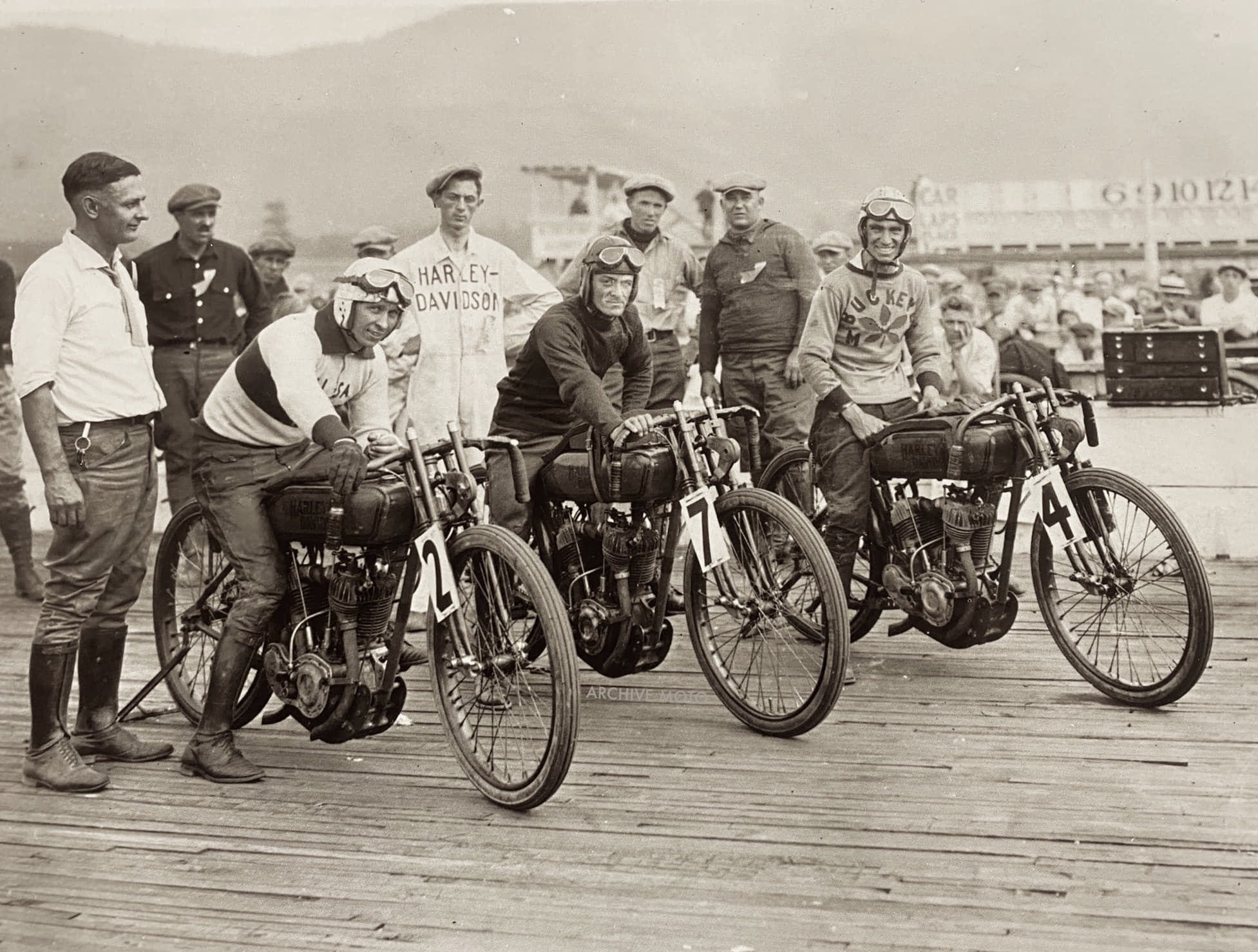
What a doozy this image was to research. For the few online resources where a copy could be uncovered, each claimed it had been taken at the Kansas City Speedway during one of the only four races ever held between 1922 and 1924. It was supposed to be an easy write-up, but as this history continues to remind us, so much has been lost or confused over the decades, and this photo had a quite different story to tell. As a result, there are entirely different stories written up, in just as much detail, about the inaugural race held at the Kansas City Speedway on September 3, 1923, as well as the final motorcycle event held the following summer, though neither bore this image.
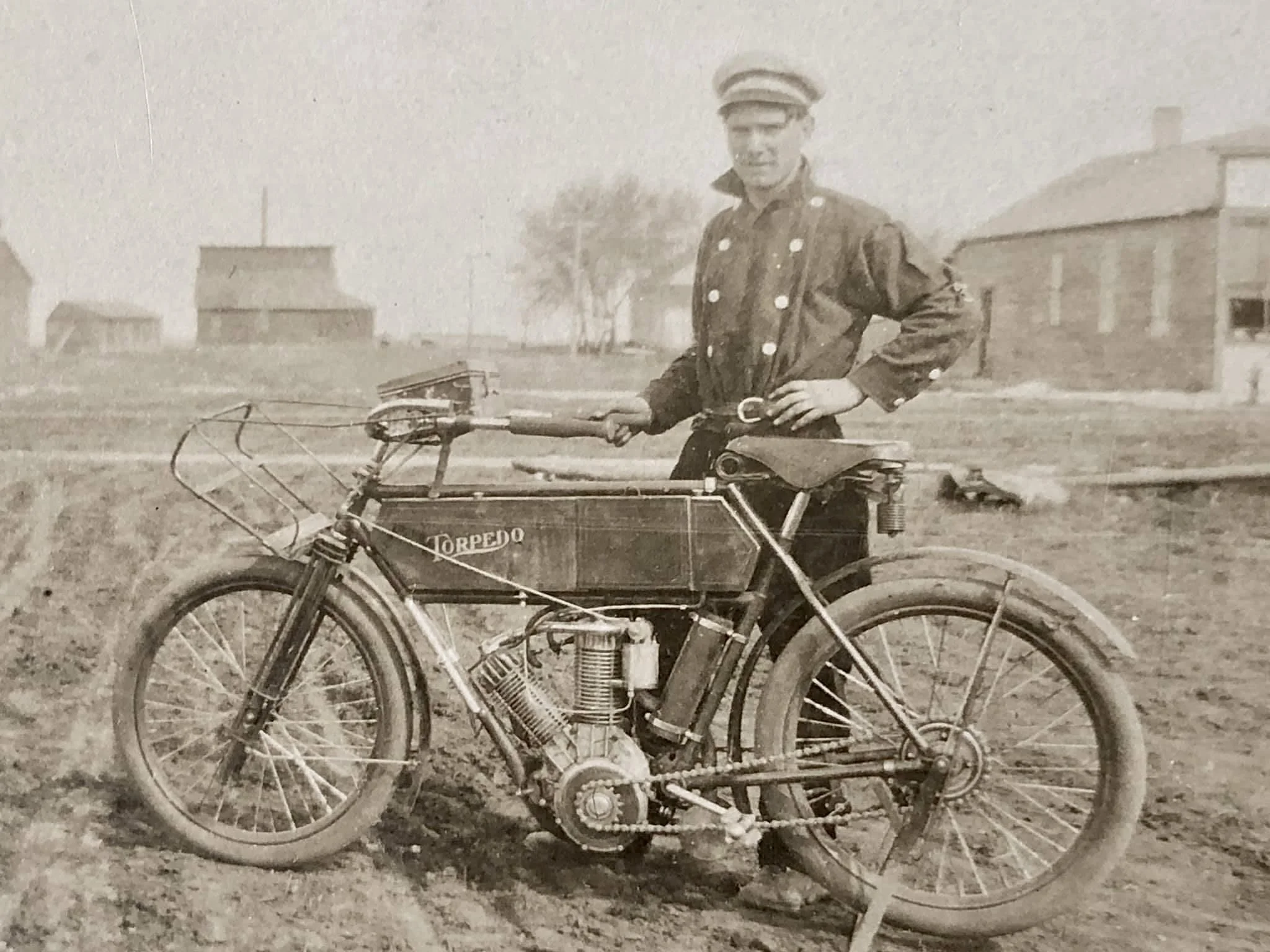
This strapping gent poses proudly behind his trusty Hornecker Torpedo, an exceedingly rare American marque that at one point was heralded as one of the best machines in the country. Founded in 1906 by George Hornecker, the Hornecker Motor Manufacturing Company began producing motorcycles from its factory in Whiting, Indiana, utilizing engines produced under the Hedstrom-Thor license. Hornecker was the son of German immigrants, initially working for Standard Oil at the turn of the 20th century. He soon parlayed his efforts into a thriving hardware store in Whiting, building upon his success by operating the town’s first telephone service and becoming a stakeholder in the First National Bank. Hornecker later served on the city council and still found the time to work as a volunteer firefighter before turning his attention to the motoring business.