The sense of freedom, adventure, and uncut joy that comes standard to every kid when they first throw their leg over a bicycle is something rarely matched in life, if ever. It truly is one's first taste of sovereignty, the ability to create and control your own experience, interact with and expand the world around you on your own terms, and live within the thrills and meditations of the moment. Imagine how amplified those same feelings must have been in 1900 when the world didn't expand endlessly on screens forever in hand but was instead limited to the tangible, immediate proximity. For a child, books and imagination could take you far, but the real world ended at the horizon. The bicycle, very much the revolution of the day at the turn of the 20th Century, offered a chance to push that boundary ever farther, for as far as one was willing to pedal. For a skinny boy in Wichita, the bicycle became the center of his world; it became a passion that would shape the life of an American motorcycling icon.
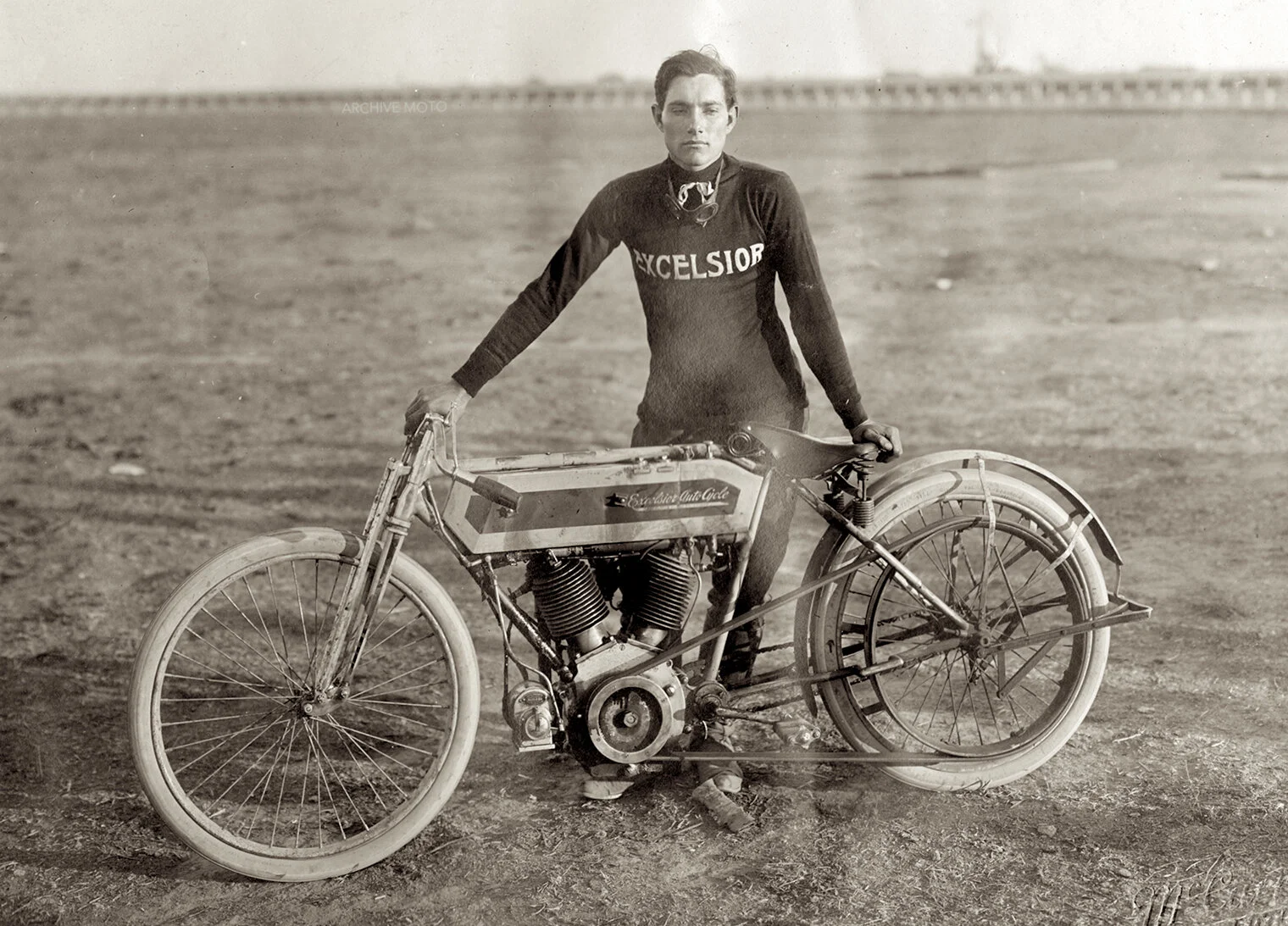
Elvin Austin Shoemaker, an amateur trade rider from Sacramento, California, posing with his race-configured 1911 Excelsior Auto-Cycle Model G. The 19-year-old Shoemaker was a sales clerk at Sacramento's Excelsior dealership, William A. Langley's capital for all things motorcycle in Northern California at the time. The young clerk had just won the Sacramento Motorcycle Club's 5-mile championship race at Agriculture Park on October 21st, 1911. Shoemaker jockeyed his stripped-stock Excelsior twin around the dusty trotting track at an average speed of 55 mph, taking the amateur championship prize as well as a third-place finish in the stock twin race. His mount was the latest release from the Excelsior Supply Company, their first twin-cylinder offering, and their last machine under the companies founding owners. A deal was struck only days before, handing over the fledgling Excelsior brand to bicycle magnate Ignaz Schwinn, a steal at only $500,000.
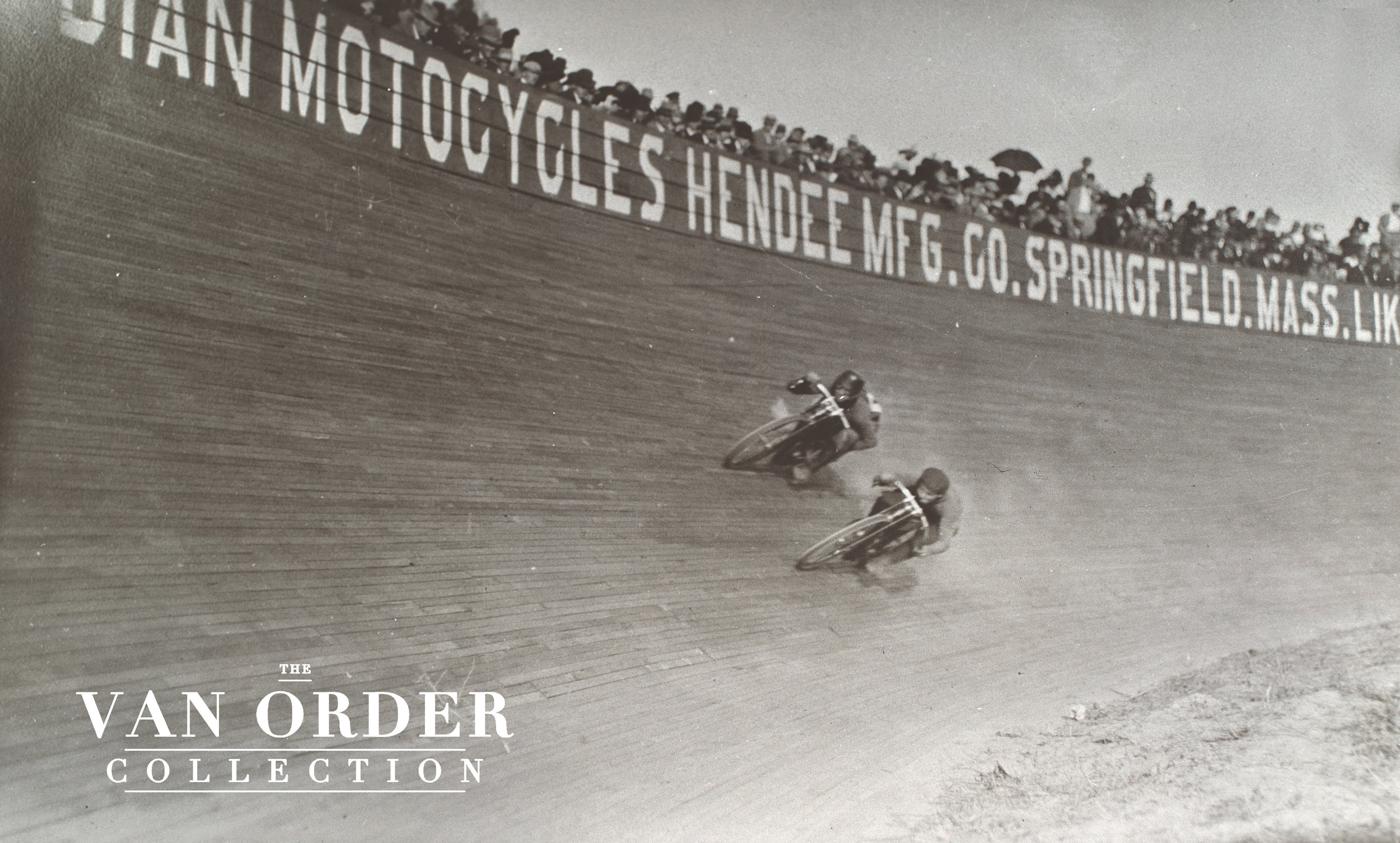
Three years ago I began a project involving one of the most historically significant collections of photographs from the Golden Age of American motorcycle racing. It has been an incredible journey full of discovery and I am excited to finally be sharing this remarkable collection, as well as the story of the man behind their preservation, Mr. Ashely Franklin Van Order.
I can’t wait for you to see this book, pre-order information will be coming soon, but if you would like to stay in the loop I have created a special Pre-Order notification HERE, sign up today!
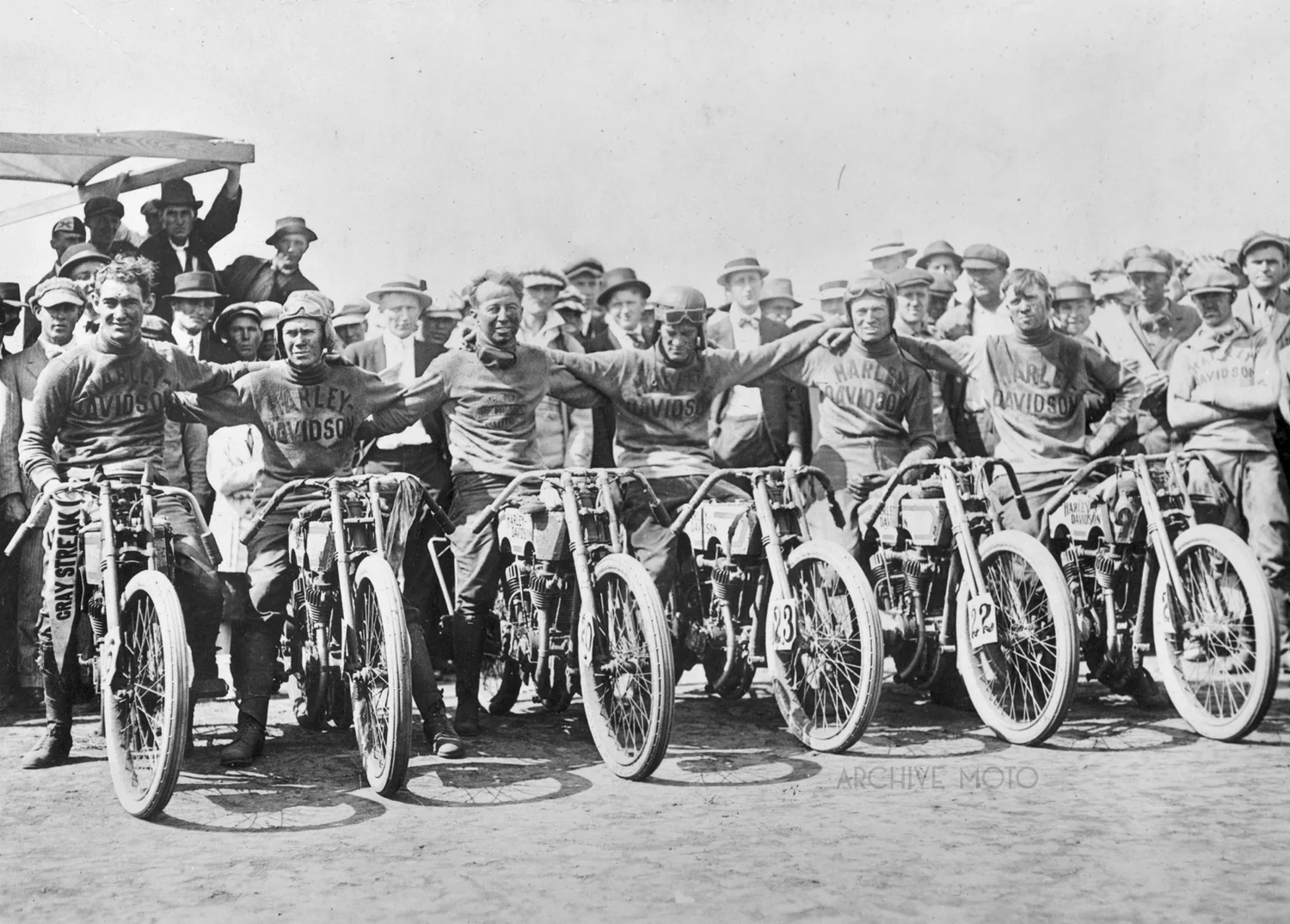
It was his distinctive posture, the way his long back arched high above his shoulders when he tucked in tight on top of his Harley-Davidson that earned him the nickname “Camelback.” Harry Otto Walker was and will always be one of America’s most popular and recognizable pioneer motorcycle racers, and photographs like this one perfectly illustrate why. Walker was one of the first racers to be handpicked by Harley-Davidson’s Bill Ottaway in 1914 when he began forming the Motor Co.’s first factory racing program. It was Walker who won the first official factory victory at the International Grand Prize 300-Mile Road Race in Venice on April 11, 1915, and it would be Walker who was most consistently marking up podium finishes and broken records for the company over the following months and years. Between 1915 and 1918 the California native racked up over a dozen first place finishes and even more speed records across the country, including a huge first place at the Dodge City 300-Mile race in July, 1915.