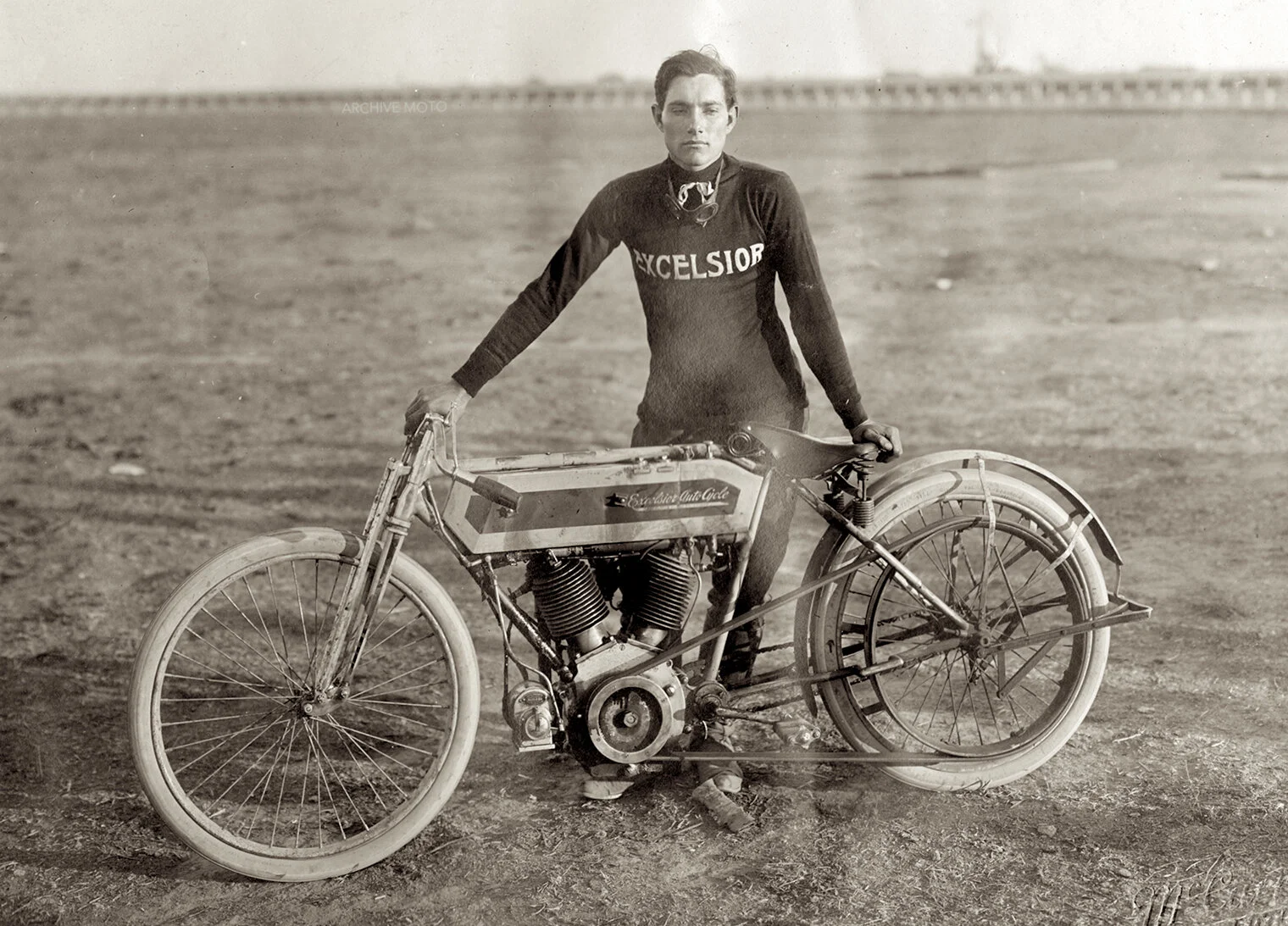
Elvin Austin Shoemaker, an amateur trade rider from Sacramento, California, posing with his race-configured 1911 Excelsior Auto-Cycle Model G. The 19-year-old Shoemaker was a sales clerk at Sacramento's Excelsior dealership, William A. Langley's capital for all things motorcycle in Northern California at the time. The young clerk had just won the Sacramento Motorcycle Club's 5-mile championship race at Agriculture Park on October 21st, 1911. Shoemaker jockeyed his stripped-stock Excelsior twin around the dusty trotting track at an average speed of 55 mph, taking the amateur championship prize as well as a third-place finish in the stock twin race. His mount was the latest release from the Excelsior Supply Company, their first twin-cylinder offering, and their last machine under the companies founding owners. A deal was struck only days before, handing over the fledgling Excelsior brand to bicycle magnate Ignaz Schwinn, a steal at only $500,000.
Three years ago I began a project involving one of the most historically significant collections of photographs from the Golden Age of American motorcycle racing. It has been an incredible journey full of discovery and I am excited to finally be sharing this remarkable collection, as well as the story of the man behind their preservation, Mr. Ashely Franklin Van Order.
I can’t wait for you to see this book, pre-order information will be coming soon, but if you would like to stay in the loop I have created a special Pre-Order notification HERE, sign up today!
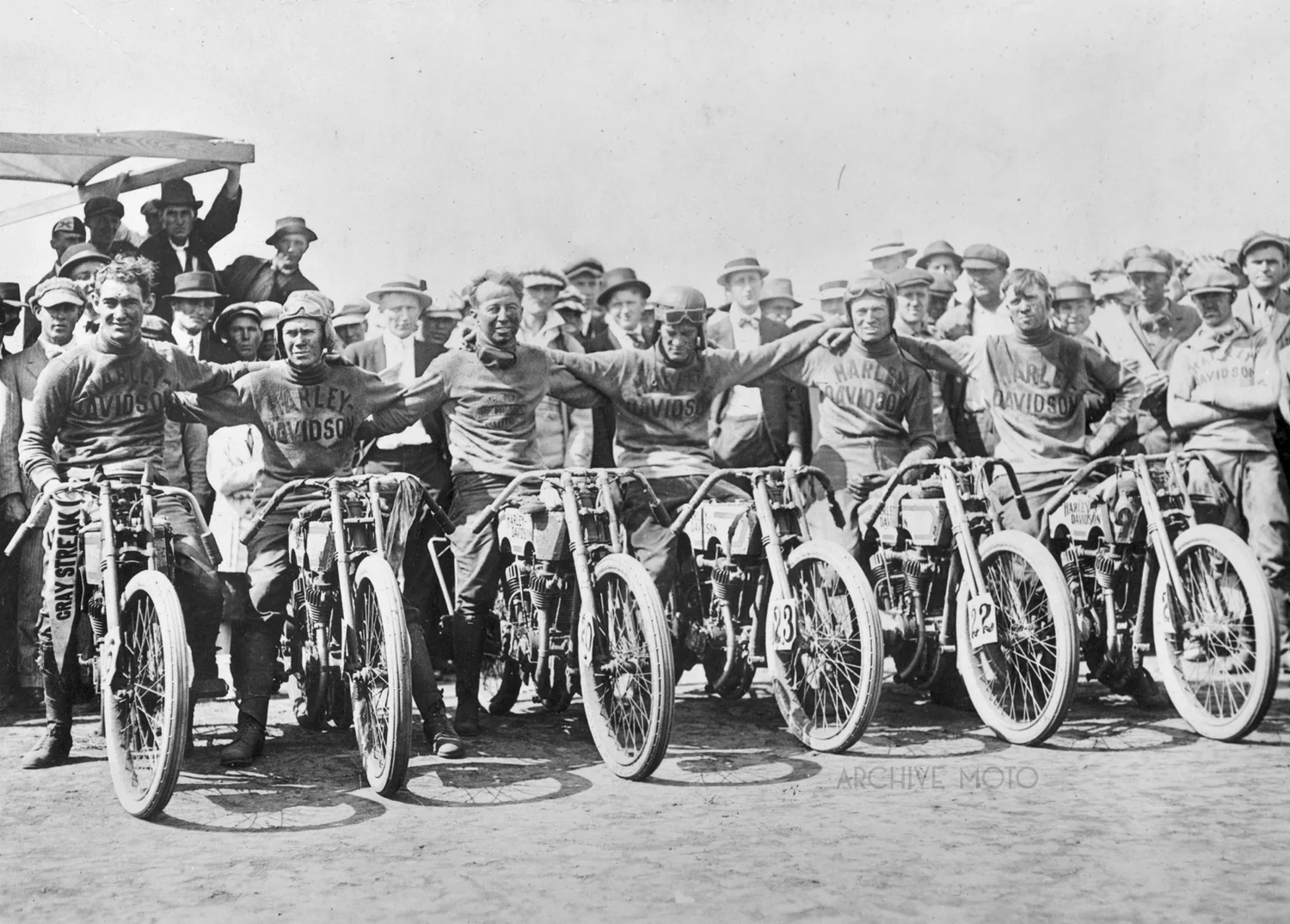
It was his distinctive posture, the way his long back arched high above his shoulders when he tucked in tight on top of his Harley-Davidson that earned him the nickname “Camelback.” Harry Otto Walker was and will always be one of America’s most popular and recognizable pioneer motorcycle racers, and photographs like this one perfectly illustrate why. Walker was one of the first racers to be handpicked by Harley-Davidson’s Bill Ottaway in 1914 when he began forming the Motor Co.’s first factory racing program. It was Walker who won the first official factory victory at the International Grand Prize 300-Mile Road Race in Venice on April 11, 1915, and it would be Walker who was most consistently marking up podium finishes and broken records for the company over the following months and years. Between 1915 and 1918 the California native racked up over a dozen first place finishes and even more speed records across the country, including a huge first place at the Dodge City 300-Mile race in July, 1915.
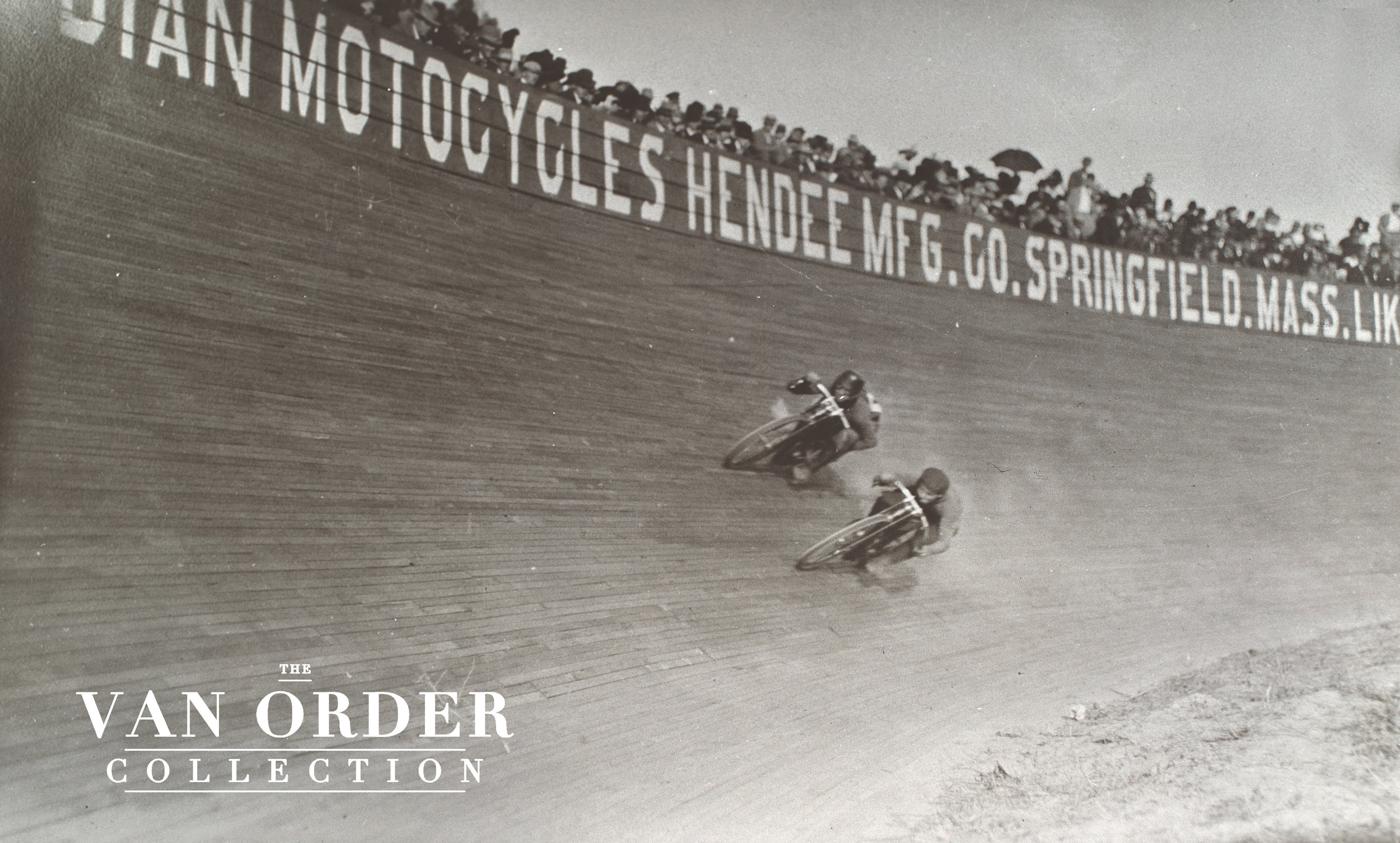
Scale. When we look back and try to imagine what it must have been like sit atop one of America’s infamous board track motordromes it is often the scale of the venue which eludes us. We have little to nothing like them today, and at the height of their popularity in the early teens, there were little else like them in the world. Another aspect of the motordrome which tends to trip up our daydreams is the variety in board track design, which produced a general congealing of all wooden racing tracks under the single name of motordrome over time. From the the first circular motordromes to the massive oval speedways, and even the small portable wall rider thrill shows have all, overtime, been referred to as motordromes. The truth is, that when most folks imagine board track racing we tend to clump together a version of all three types of venues.