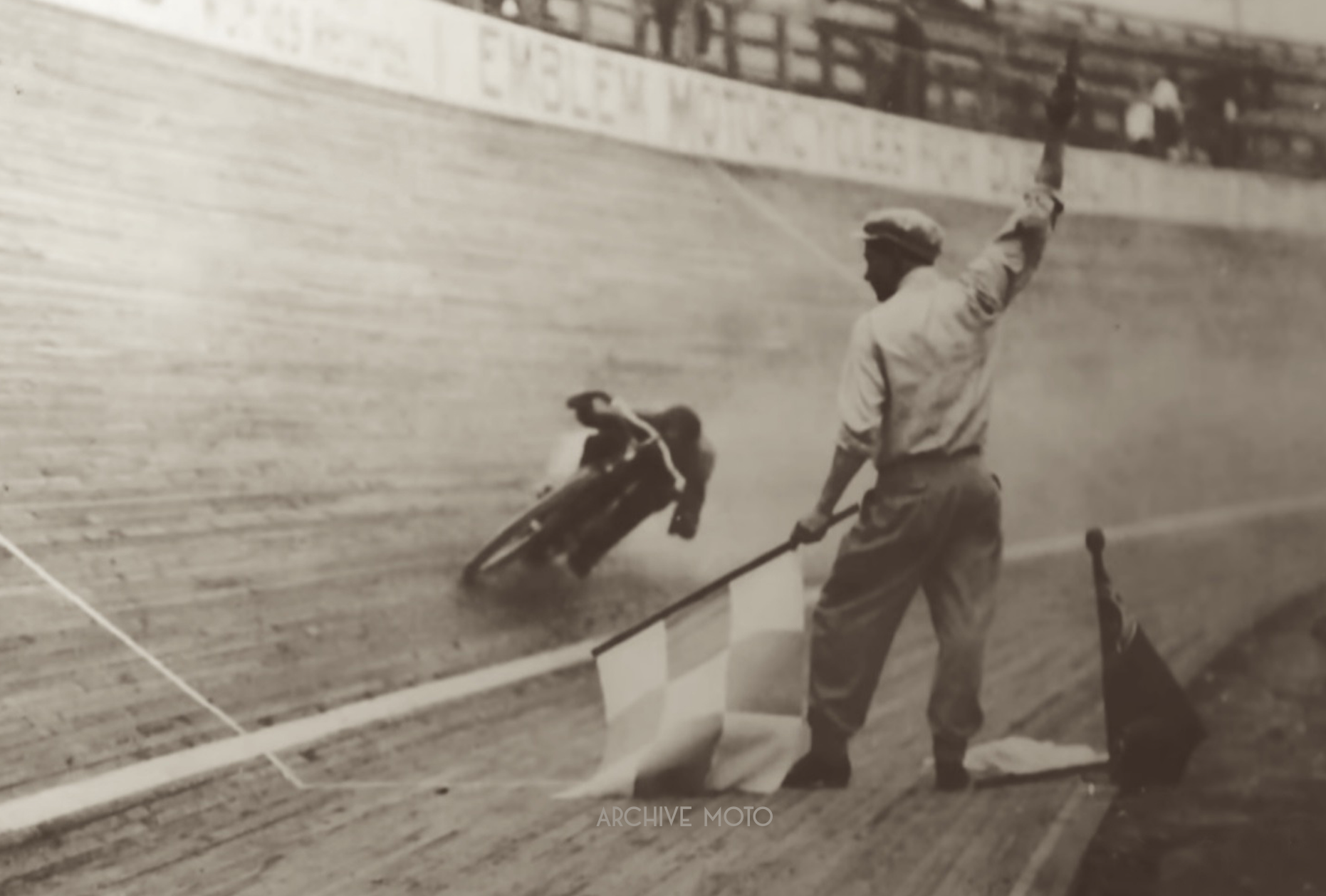
There is an ancient greek tale of a god named Prometheus, an original being known as a Titan who is said to have molded man from clay and delivered unto him the gift of fire which he took from its divine source. Photographed here is a man named Jacob DeRosier, one of the first to ever witness the combustion-powered cycle brought to America by French cyclist Henri Fournier in 1898. An eighteen year old professional cyclist himself at the time, DeRosier pestered his way onboard Fournier’s motorized pacing machine and proved that his bold curiosity was backed by a fearless approach to handling the cumbersome, fiery new machine. As such Fournier hired the young man from Massachusetts to pilot his motor-pacer for the coming season, and the motorized racing career of one of the world’s greatest had begun.
Attrition. One of the major issues concerning the population of capable professional racers which weighed heavy on the era of the motordrome, one of America’s favorite motorsports in the early teens. Having exploded in popularity since its introduction in 1909, by 1913 the dangerous sport of board track motordrome racing was hitting its peak, with around 18 tracks operating around the country and another 9 or so to come in the next 2 years. Thrilling, dangerous, controversial, and lucrative, the sport of board track racing had never been as popular as it was in 1913. The peril’s of the sport though had already claimed the life of a dozen racers, killing a nearly equal number of spectators, and injuring or maiming dozens, and dozens more. Despite the risk, or perhaps as a result of it, the fans still filled the bleachers atop the treacherous saucers leaving promoters constantly searching for new competitors.
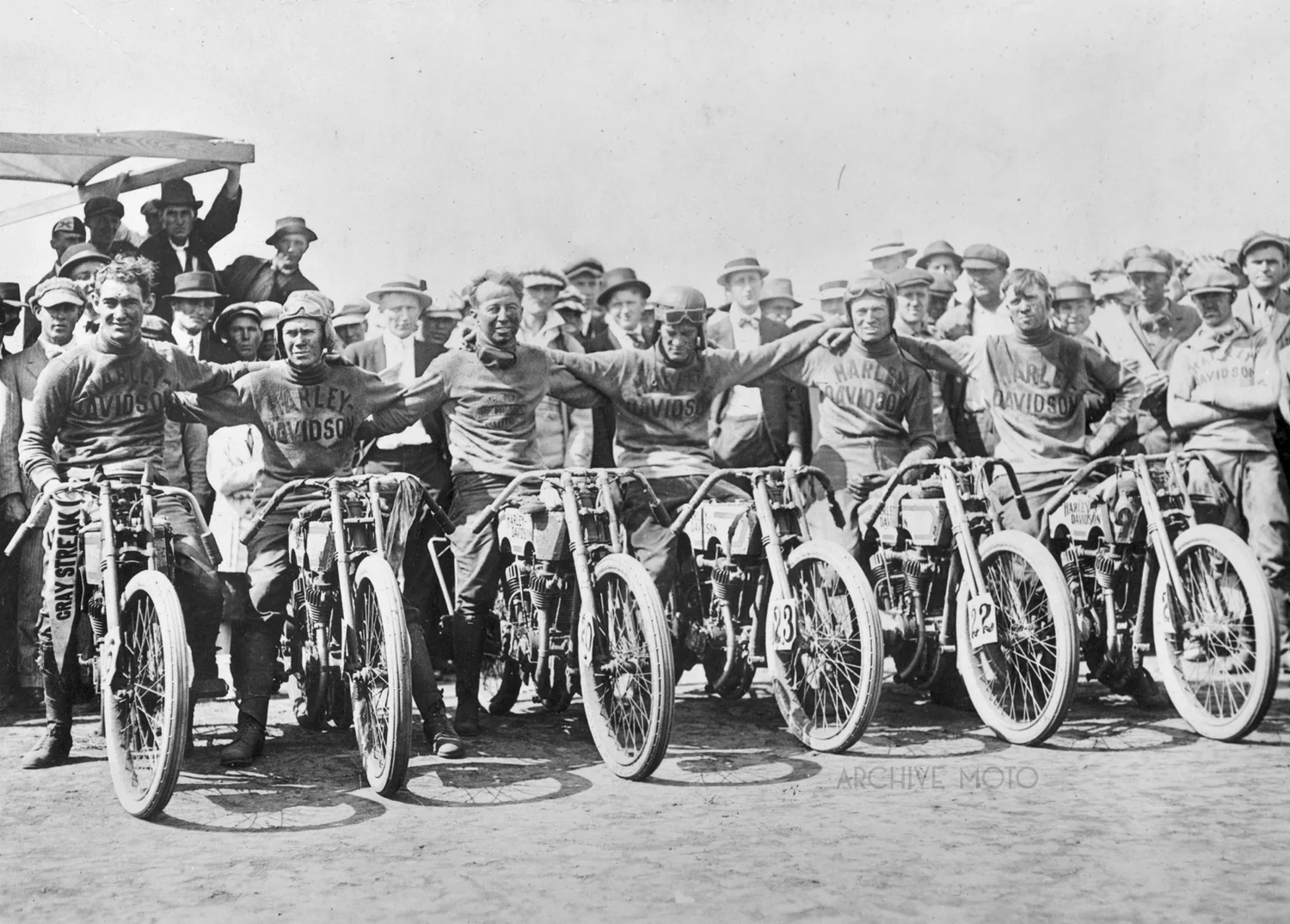
Despite the common narrative that Harley-Davidson was a top level contender on the boards of America’s infamous motordromes, the truth the matter is quite a different story. In fact, the legendary Milwaukee motorcycle manufacturer didn’t make their official professional racing debut until the short circular wooden coliseums were all but gone.
From the earliest days, the motorcycle industry in America realized the profitable potential between aligning their products with the sporting young gentlemen who slung themselves around the race tracks. No doubt a philosophy carried over from the good ole’ days of bicycle competition, advertisements which initially touted the brand’s superior technology quickly began to backupsuch claims with their successes at speed trails, reliability runs, road races, and hill climbs. Indian Motocycles, one of the first manufacturers to realize the lucrative relationship between competition success and showroom sales was also one of the first to capitalize on their victories, running ads like Indian’s 1904 “Scalps” campaign which trumpeted their titles back to 1902.