America first fell in love with motorized speed on the hard-packed sands of Florida’s coastline at the beginning of the 20th century. The annual Carnival of Speed at Ormond Beach, a northern neighborhood of Daytona immediately caught the attention of the world’s most passionate auto and motorcycle enthusiasts, establishing the area as the world’s “Birthplace of Speed.” However, as the industry and infrastructure of racing grew over the years the pursuit of speed records shifted to more managed and manicured venues like the speedway tracks at Indianapolis, the perilous short circular motordromes, and the large wooden super speedways of the late teens. In February 1920, Harley-Davidson, who was at the height of their racing success given their powerhouse stable of “Wrecking Crew” racers and their high-test factory racing machines like the banjo two cam 8 valves, resolved to revisit the sunny shores of Florida’s Eastern seaboard, aiming to set new land speed records once again on those hallowed sands.
Denver, like most metropolitan cities at the turn of the 20th century has a long heritage of motorcycling. However, Denver is unique in that it was the only city in America to construct and support two full sized board track motordromes. Though the Northeast had a number of tracks in close proximity of one another, and Los Angeles technically did have three tracks but with varying shapes and sizes, the two full sized circular motordromes in Denver, Lakeside and Tuileries, became a grand experiment as to how much competition Americans could handle, and made Denver an early capital of the sport.
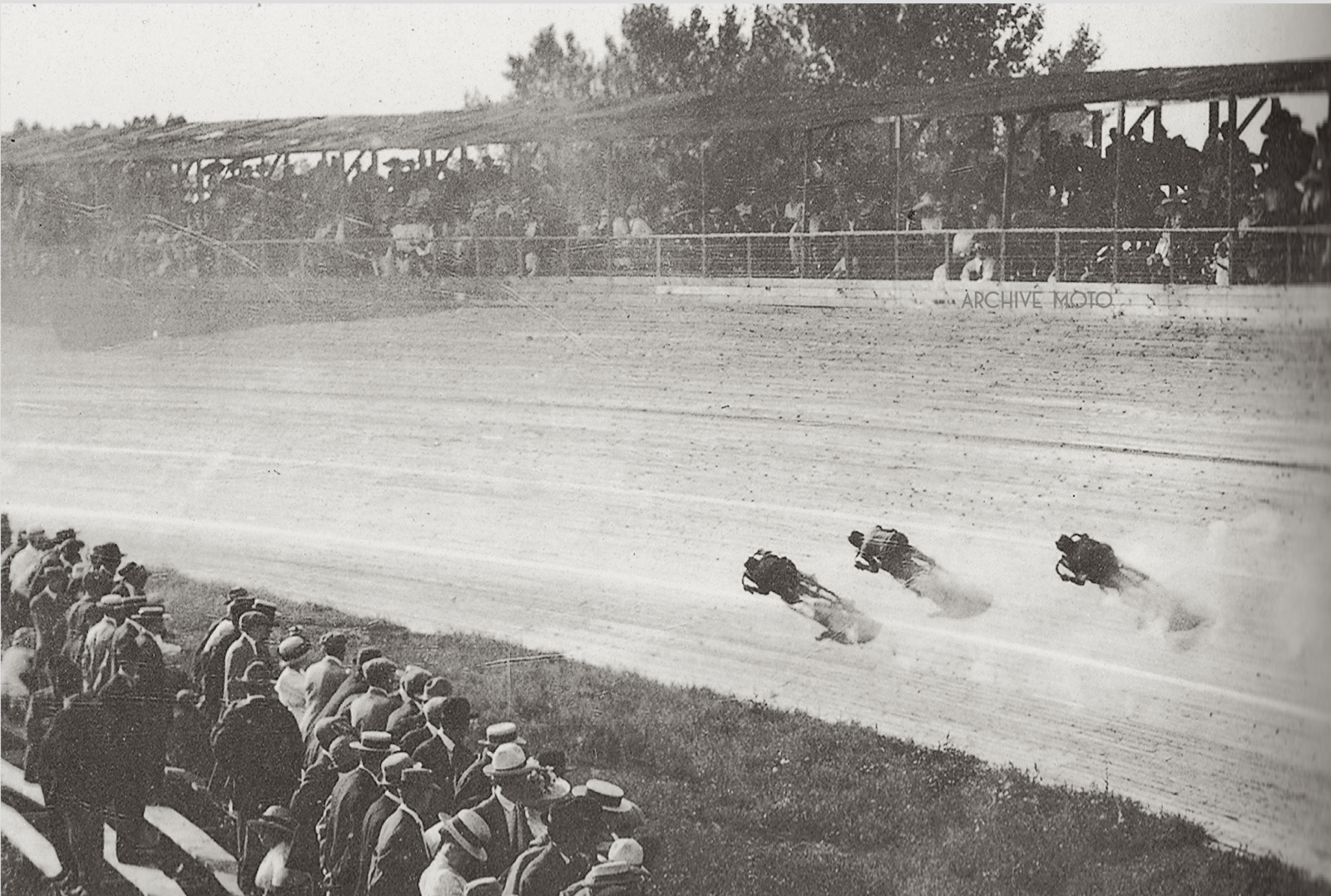
Seen here a race on the shallow banking of Denver's Tuileries Motordrome ca. 1912, one of the first board track motordromes built in America. The track originally opened in the Spring of 1911 along with a second track at the White City Amusement Park, also known as the Lakeside Motordrome, an unique experiment in multi-track sustainability.
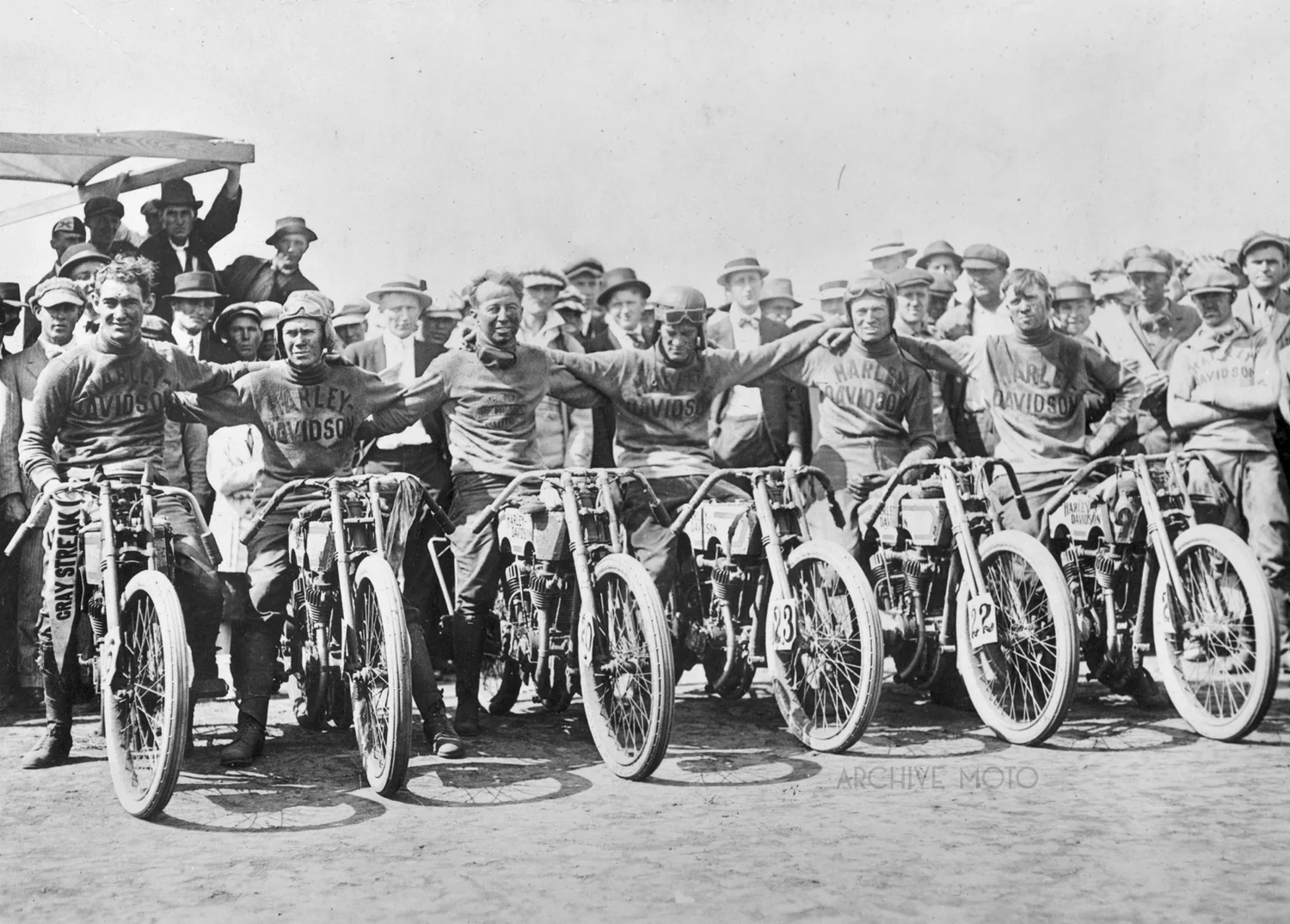
At first glance this photo seems to capture a moment shared between teammates, members of the eminent Harley-Davidson Wrecking Crew lined up either in anticipation of their victory, or perhaps just after, on a dusty dirt oval in the 1920’s. With a bit more investigation it is discovered that the photo comes from a series of M&ATA National Championship races held at Los Angeles’ old Ascot Park in January 1920, just as professional motorcycle racing in America was rebooting after WWI. The riders then begin to come into focus, from left to right, as Freddie Ludlow, Ralph Hepburn, Albert “Shrimp” Burns, and Otto Walker, but if the caption were to end there far too much of the story would remain untold.