The Indian Model O, a 265cc lightweight horizontally opposed twin. Manufactured towards the final years of WWI, the Model O was Indian's attempt at capturing a younger customer who may not have the cheddar for the big bikes of the day. Unfortunately the tiny displacement didn't thrill young riders, the war effort made production and sales very difficult, and the explosion of mass produced, reliable, and affordable automobiles marked the end of the Model O by 1919. I doubt he won any races with his tricked out Model O racer, but he was out there, and sometimes thats all that matters.
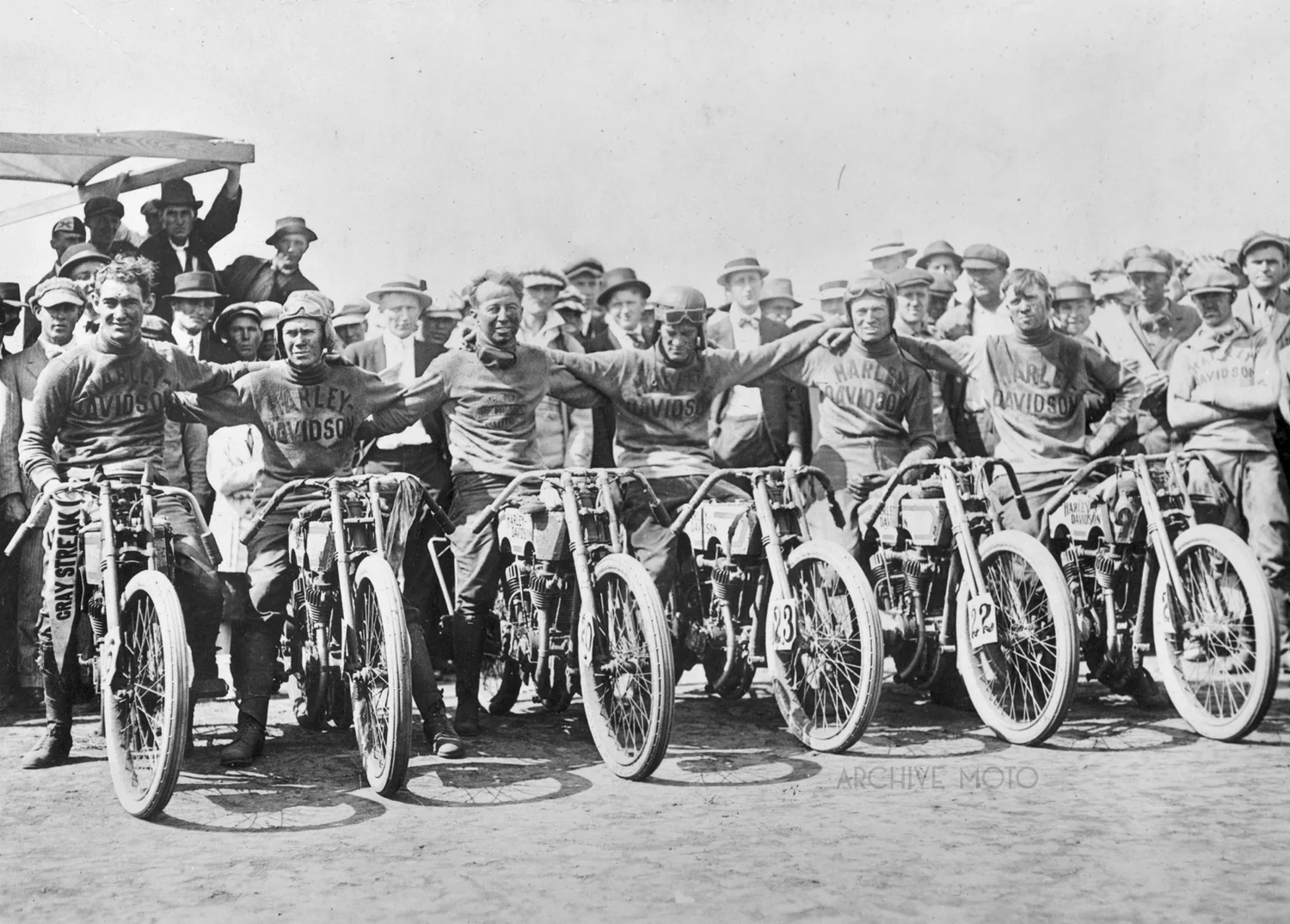
Harley-Davidson may have not been on the line at the dawn of American motorcycle racing, but when they finally did enter into professional racing in 1914 they did so with a single goal in mind, domination. Under the direction of the legendary Bill Ottoway Harley quickly contracted some of the most talented young riders in the country, beginning with Denver's Leslie "Red" Parkhurst. Harley faired well in its first years in the game and by the time professional racing resumed following WWI the Milwaukee factory assembled a team so brimming with natural skill that a simple nickname now personifies what it meant to race... The Wrecking Crew. Which one is your favorite?
Arthur Mitchell was one of America's earliest professional motorcycle racers and like many of America's first, Mitchell converted to the fiery behemoths after a career in cycle racing. He began racing bicycles in 1895 when he was only 15, holding off his schooling until the winter so that he could compete the remainder of the year. Mitchell then transitioned to motorcycles around 1905, competing in races around the country atop Indians and Thors. In 1909 he signed an exclusive deal with the German import brand N.S.U., running toe-to-toe with legends like Jake DeRosier, Paul Derkum, and Morty Graves on the boards of America’s infamous Motordromes. Mitchell continued racing professionally into the teens on a variety of machines including Flying Merkel and Harley-Davidson, but it was at this time that he began to diversify his role in the world of motorcycling.
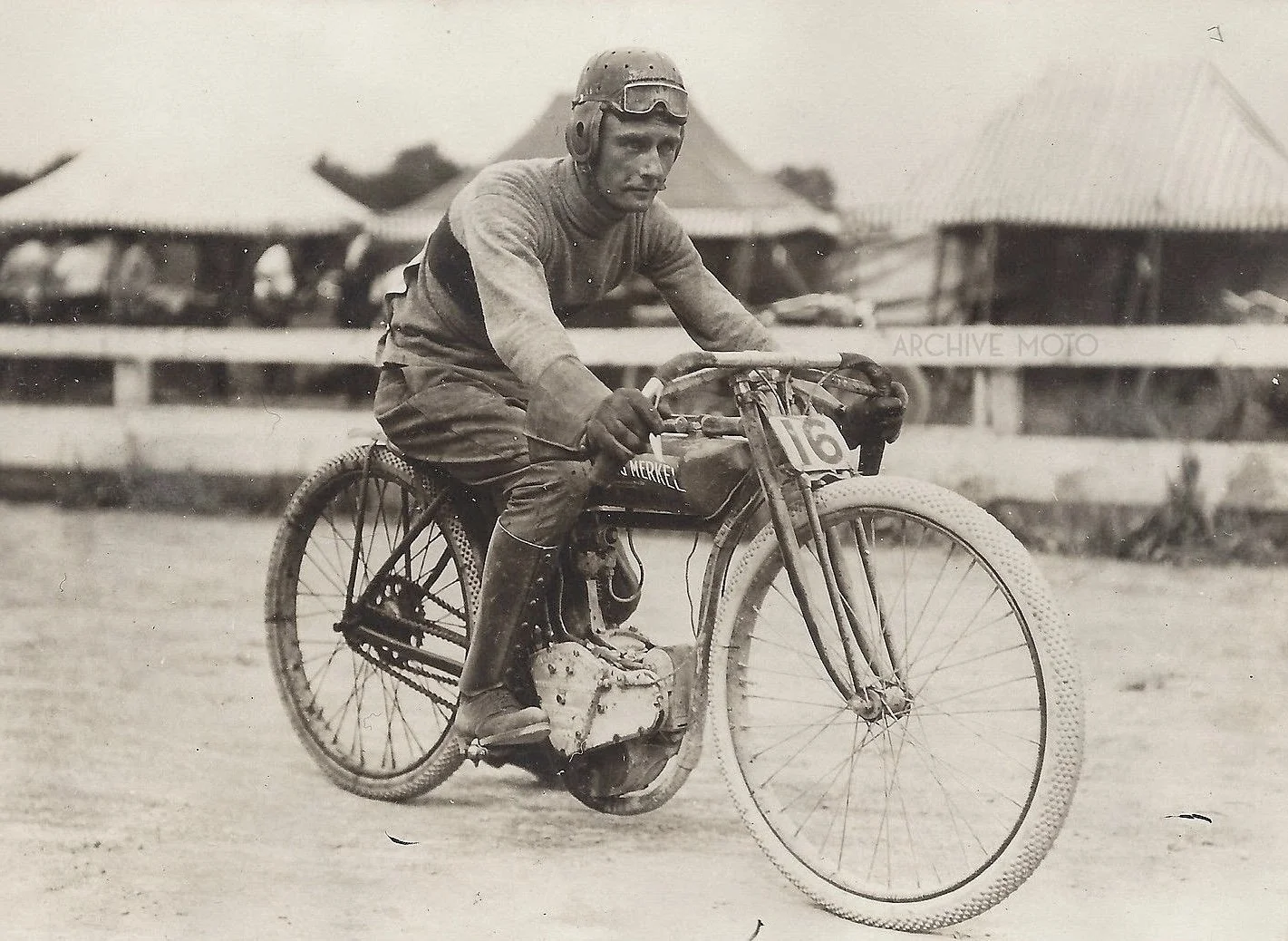
Lee S. Taylor, captain of the Flying Merkel "Yellow Jackets" racing team in Toledo, Ohio, June 9, 1914. Taylor, who had previously piloted machines for Emblem took the checkered flag on Toledo's 1-mile dirt oval winning the 100 mile race for Merkel, but by the end of the 1914 season Taylor left Merkel and became a member of the powerhouse Indian racing team, winning the 1914 Savannah 300 to kick off his run with the Wigwam.