Birth of a Sensation

1 Comment

Birth of a Sensation

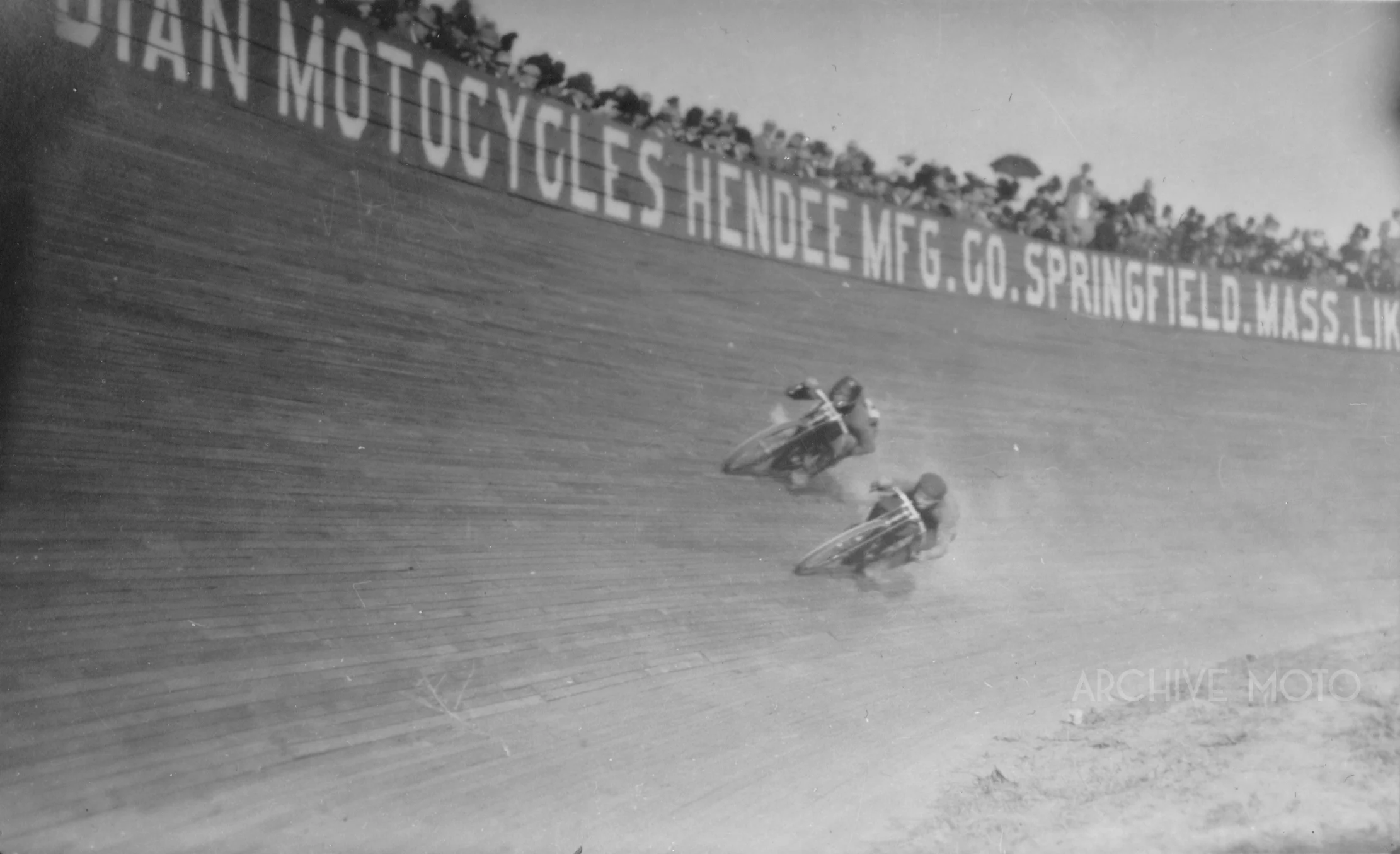
One of the most captivating chapters in the evolution of American motorcycle culture is the era of the Motordrome. These circular wooden tracks, typically between 1/3 of a mile and 1 mile in length, steeply banked up to 65 degrees first appeared in 1909. Though they were a natural progression from the smaller wooden bicycle tracks, or velodromes, the Motordrome provided an intense new level of excitement for spectators. 

Opened in July of 1908 the Clifton Stadium in Patterson, NJ was the first of the bicycle tracks to be constructed with consideration of motorcycle matches. Though it was considerably wider and longer than the Velodromes of the day, still only two machines could fit on the boards at one time. Clifton showed manufacturers like Indian and the track's builder Jack Prince that interest in motorcycle events was bubbling, there was money to be made. Prince then set off for Los Angeles to build the first specific motorcycle racing track in America. A 1/3 of a mile wooden oval with 45 degree banked turns and flat straights was completed in March of 1909 and named the Los Angeles Coliseum. Though the track was an immediate success, Prince learned from the riders that negotiating the incline shift from the banked turns onto the flat straights was difficult and limiting. 

Meanwhile founders of the Indian motorcycle company, George Hendee and Oscar Hedstrom were no strangers to the value of racing their motorcycles. As early as 1908 specifically engineered racing machines were being developed by Hedstrom and an official racing team was assembled. In a brilliant business move George Hendee saw to it that the next Motordrome would be built close to their headquarters in Springfield, MA. He then, in early 1909 secured a 10 year lease on a plot of land 3 miles north of downtown and contracted Prince to begin construction as soon as he completed the LA Coliseum. On July 31st 1909 Prince unveiled the most state of the art racing facility the world had ever seen. Like the LA Coliseum, the Springfield Stadium was 1/3 of a mile in length, however learning from the racers in LA Prince made the Springfield track circular, with a consistent banking. This new design made an instant impact on the speedsand when Indian's Indian's star riders like Fred Huyck and Jake DeRosier fired their machines up for the first time they smashed all existing records, some by as much as 19 seconds.

The success of the Springfield design in the summer of 1909 set the foundation for an explosion of short, circular board track Motordromes across the country. Though the extremely dangerous nature and high maintenance cost would limit the era of the circular Motordrome to less than a decade, it continues to be one of the most idolized periods in motorcycle culture. One of the aims of Archive Moto is to thoroughly document each of these remarkable tracks and the men who fearlessly competed on them, stay tuned! In the meantime enjoy this iconic shot of Morty Graves and Frank Ward thrilling the crowd at the LA Cloiseum in 1910.
1 Comment

A.G. Chapplle, Ormond Beach 1909

Comment

A.G. Chapplle, Ormond Beach 1909

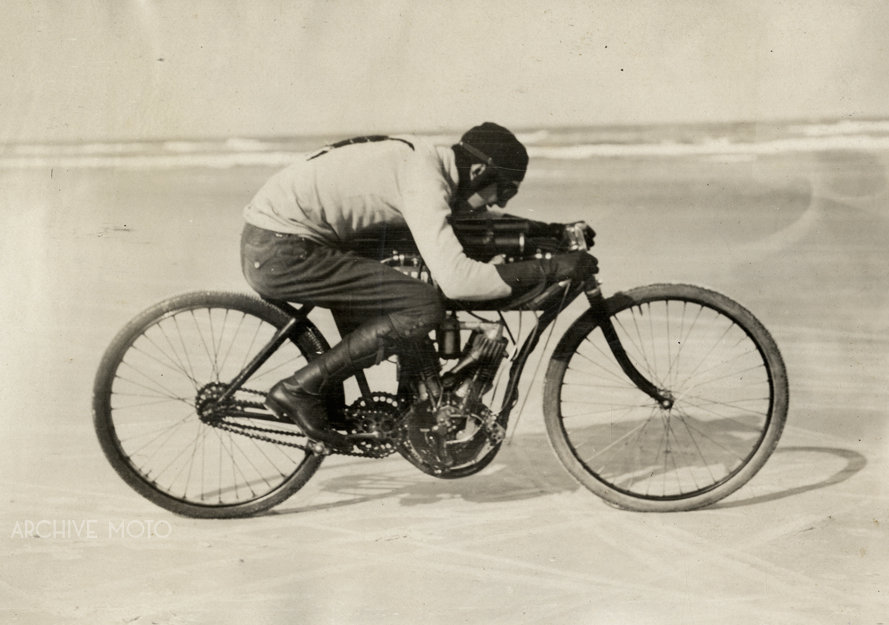
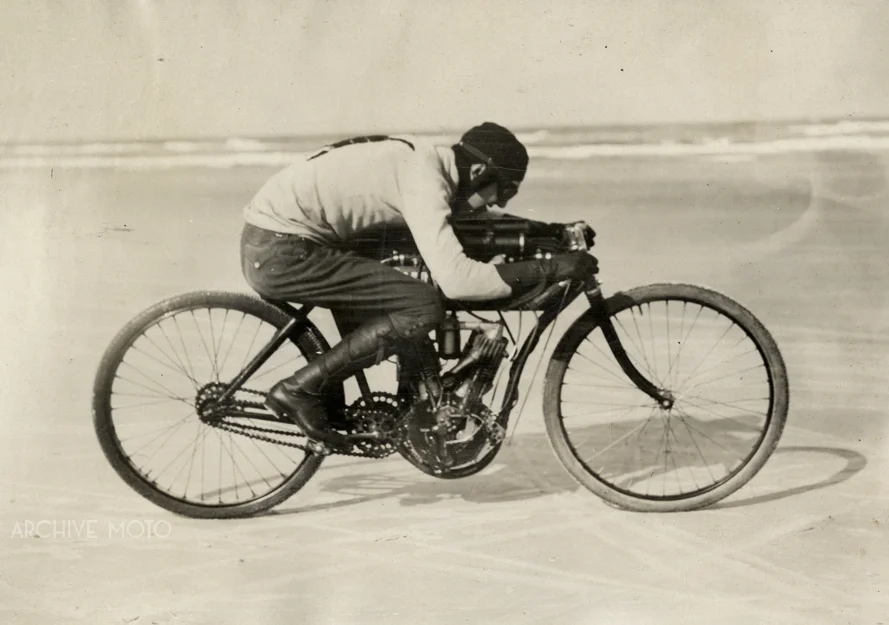
Taken during the speed trails held at Ormond Beach in 1909, this shot features New York native A.G Chapple, one of the three factory racers that accompanied Carl Oscar Hedstrom to the Daytona area to test out the latest Indian technology. Though his teammates Walter Goerke and Robert Stubbs shared the most records and wins that weekend, Chapple did take the win for the 10-mile event atop his 7hp Indian twin prototype on March 23, 1909. It appears as though this machine is one of the very elusive, seminal "bent tank", loop-framed prototypes of 1908, a machine that I find thoroughly intriguing and hope to uncover more information about. 

Comment

Pioneer: Arthur Mitchell

Comment

Pioneer: Arthur Mitchell

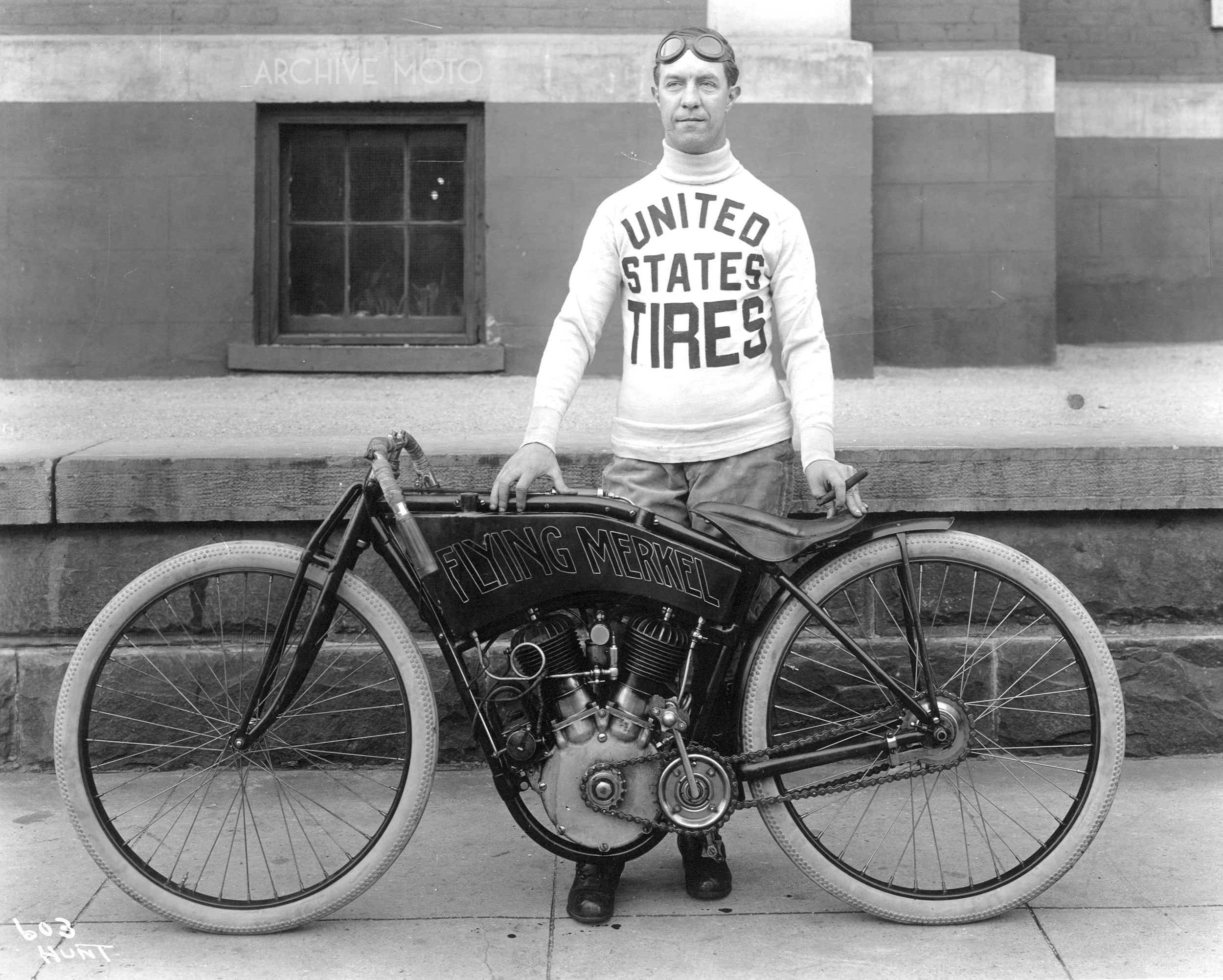
One of motorcycling culture's first ambassadors, here is New Orleans native, pioneer motorcycle racer, and F.A.M. official Arthur Mitchell posing in downtown Birmingham, AL. ca 1912. Mitchell began racing bicycles as a teenager in the late 1800's, and like many of his generation he found himself perfectly positioned to transition into Southern California's motorcycle racing scene as the sport was first taking shape. Mitchell entered his first races in the New Orleans area in 1905, and by 1908 he turned pro. Despite having started out his career on an Indian, Mitchell inked a deal with the German manufacturer NSU in October of 1908 and instantly became the rival for Indian's growing stable. Paul Derkum, Morty Graves, Robert Stubbs, and Jake DeRosier all found Mitchell and his NSU a difficult pair to overcome. Though Mitchell enjoyed a fruitful career with NSU, he raced several different mounts throughout his career including Thor, MM, and Flying Merkel, he even took one of Harley's early development 11K racers out in 1914.

As the sport developed events once held on fairground horse tracks began taking place on the perilous board track motordromes, Mitchell kept his pace and continued to be a fierce competitor. According to an article from the Los Angeles Herald in 1909 Mitchell had the "all of the appearance of a bulldog and the grit of a man who knows no fear." Mitchell's career took him to every corner of the country and as a result of his travels Mitchell was able to interact with many local clubs. Many of these local organizations, especially those located in the southeastern US credit Mitchell as the man who helped their formation. By 1912 he had involved himself with all aspects of the racing game including working as a sanctioned referee for the FAM. Apart from his career as a racer, referee, and FAM representative, Mitchell also held a job as the sales manager for the Texas motorcycle Company in Dallas, TX. in 1911. By the teens Mitchell was heavily involved in the culture of motorcycling in America, and though he was in his 30's the bulldog continued to race.

This photo, taken by Birmingham's moto-enthusiast photographer O.V. Hunt shows Mitchell in downtown Birmingham, AL ca. 1912. Between 1910 and 1913 Mitchell competed in several races in the Magic City onboard Flying Merkels including this iconic twin.

Comment

Archive Icon: Cleo Francis Pineau

3 Comments

Archive Icon: Cleo Francis Pineau

Cleo Pineau.JPG

Like most of America's earliest professional motorcycle racers, Cleo Francis Pineau was far from average. A native of Albuquerque, NM., it is said that his restless nature led him to drop out of school in the 6th grade, shortly after which he began racing motorcycles. He was a staple member of the Flying Merkel factory racing team, in the company of such greats as Lee Taylor, Ralph DePalma, Charlie Balke, and Maldwyn Jones. On board his trusty Merkel, Pineau crisscrossed the country in the early teens racing at the most prestigious events of the day, including the 300 mile endurance competition held in Savannah in 1913 and 1914. 

With the suspension of professional racing during WWI many racers enlisted for service. Not satisfied with just any role in the war Pineau enlisted in the RAF and became a fighter pilot. He earned his title of Ace after his sixth confirmed kill during aerial dogfighting in France. He himself was then shot down in October of 1918 and held captive in a German prisoner camp. Upon his safe release Pineau was decorated with countless medals and the highest honors from England, France, and Belgium, and even received a hand written letter from King George V welcoming his safe return. 

After the war Pineau continued his motorcycle racing career, but by the late 1920's he had ventured into the business world by forming the Radiant Steel Products Company which is still in operation to this day. In addition to his steel company, Pineau also established the Williamsport-Lycoming Airport and was accompanied by his friends and American aviation icons Wiley Post and Amelia Earhart during the opening dedication ceremony. In this photo 20 year old C.F. Pineau sits steely-eyed atop his Merkel single during the June 1914 races held in Toledo. Pineau's Flying Merkel teammate Lee Taylor took the checkered flag that day, and a few months later beat him and the rest of the field again at the 1914 Savannah 300, though his victory in Georgia was on board an Indian twin.

3 Comments